

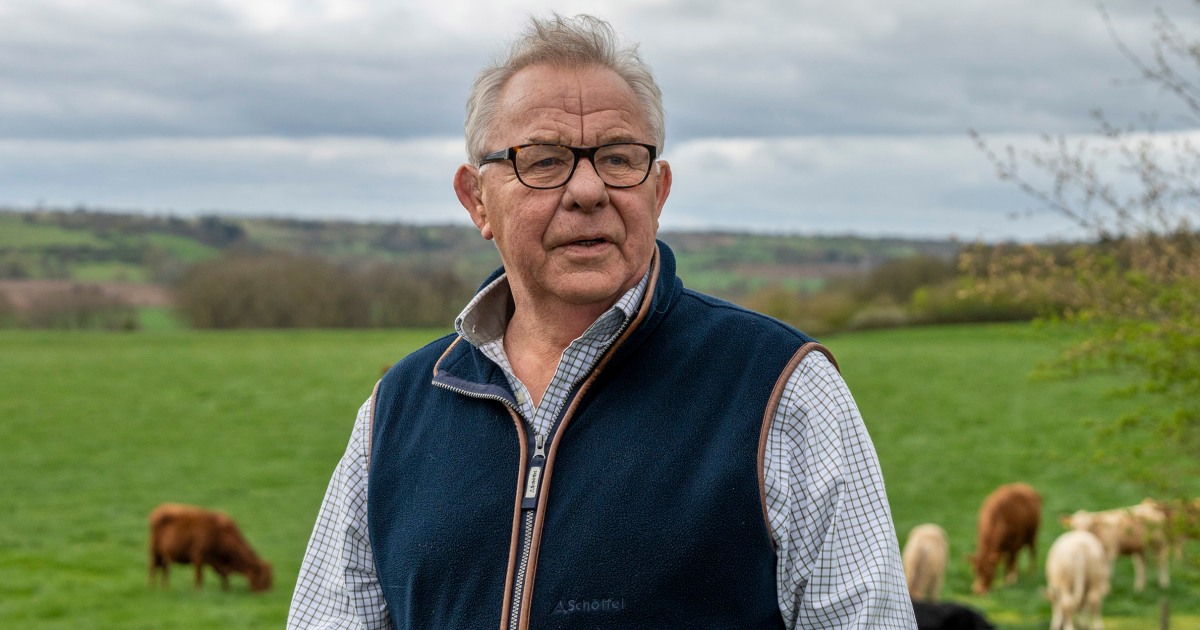
The chaos is already creeping into the balance sheet of large businesses like P.G. Rix Farms, which employs around 40 people some 90 minutes’ drive east of London.
It grows mainly onions and potatoes, supplying industry giants such as McDonald’s and Tesco, Britain’s largest supermarket chain. It also plants sugar beets, cereals and willow trees, whose fibrous wood is used to make cricket bats.
NBC News visited the farm on an overcast morning this Thursday. It sits just outside Colchester, which claims to be the country’s oldest town and was the Romans’ first capital in Britain.
Today, the farm’s maze of tracks, rolling fields and water meadows are near a government-protected “Area of Outstanding Natural Beauty.” It is the kind of scene that stirs something deep in a certain English imagination: a landscape out of John Constable, the 19th-century Romantic painter whose work came to embody the nation’s ideal vision of itself.
This is no mom-and-pop operation, rather an empire of alliums and tubers. Rix Farms made 1.2 million pounds ($1.6 million) after taxes last year, filings show, and is among the country’s largest 10% of farms.
The war has prompted an uncomfortable realization for its chairman, John Rix, an affable farmer and businessman in fleece and a checked shirt.
“You think, hang on a minute, this isn’t going to add up,” he said while giving an impromptu tour of his 6,500 acres in a muddy 4×4.

“There does come a point where you have to go back to your customers and say, ‘Look —” he said. He trails off but the implication is clear: Prices will have to rise.
That means people doing their weekly grocery shopping will end up footing part of the bill, as they did after Russia’s invasion of Ukraine in 2022. (U.K. food inflation topped out at 19.1% in March 2023, but is currently back down at 3.3%.)
“Suddenly you’ve got this horrible inflation figure,” he said, playing out the consequences of this upheaval. “The economic cost across the globe is already fantastic, absolutely fantastic.”
Rix has seen a 44% price increase for diesel fuel, which powers the machines that sow and harvest 44 fields of potatoes and around 60 fields of onions. Together with natural gas, used to dry millions of onions each week, that will add 649,000 pounds to the farm’s costs this year, he said. Rix believes they are covered for this year’s fertilizer, but if the conflict and blockade drags on much longer, this will become another pain point when they buy next year’s supply in October.
“I wake up each morning thinking, ‘It’s got to be over,’” said Rix, who at 68 says he is all but retired, his son Sam, 35, now managing director. “But so far it hasn’t been.”
That morning, he rose to find that President Donald Trump claimed overnight he was going to bomb Iran “back to the Stone Age.”
“It’s not very statesmanlike is it?” said Rix with a sigh.
Asked for comment on the farmers’ criticisms, White House Deputy Press Secretary Anna Kelly said that the “administration’s detailed planning process” meant it was “was prepared” for any action taken by Iran.
Trump knew “Iran would try to stop the freedom of navigation” and “he has taken action to destroy over 40 minelaying vessels,” Kelly said. “The President is confident that the Strait will be opened very soon, and he has been clear about the consequences if it is not.”
He and his workers talk about how unnerving it feels to have their livelihoods subject to the whims of a man 3,700 miles away in the White House.
“I do think about it all the time,” said Michael Bloomfield, 37, another “fighter pilot” tractor driver.

“If the field needs a second pass, I’m thinking, ‘Well that’s going to cost X amount more to go over again,’” he said, wearing a high-visibility tunic and black baseball cap.
One silver lining he and other staffers foresee is that the public might become more aware about what it actually takes to put food on their plates.
Ultimately, all crops need nitrogen to grow. They get this either from the soil or, as with modern farming, through added fertilizer. One of the easiest ways of producing nitrogen fertilizers such as urea is by using natural gas, which the Persian Gulf has in abundance.
Unlike oil, fertilizer is not generally backed by large strategic public stockpiles that can be rapidly released in a crisis. It’s only needed for a few specific months of the year, so it’s usually sold and shipped quickly as needed. It is also not easy to store, and some of it can explode — like the ammonia nitrate blast that rocked Beirut in August 2020.










Leave a Reply