

The Artemis II mission launched on Wednesday, taking four astronauts on a historic, 10-day mission around the moon and giving them views of a lifetime along the way.
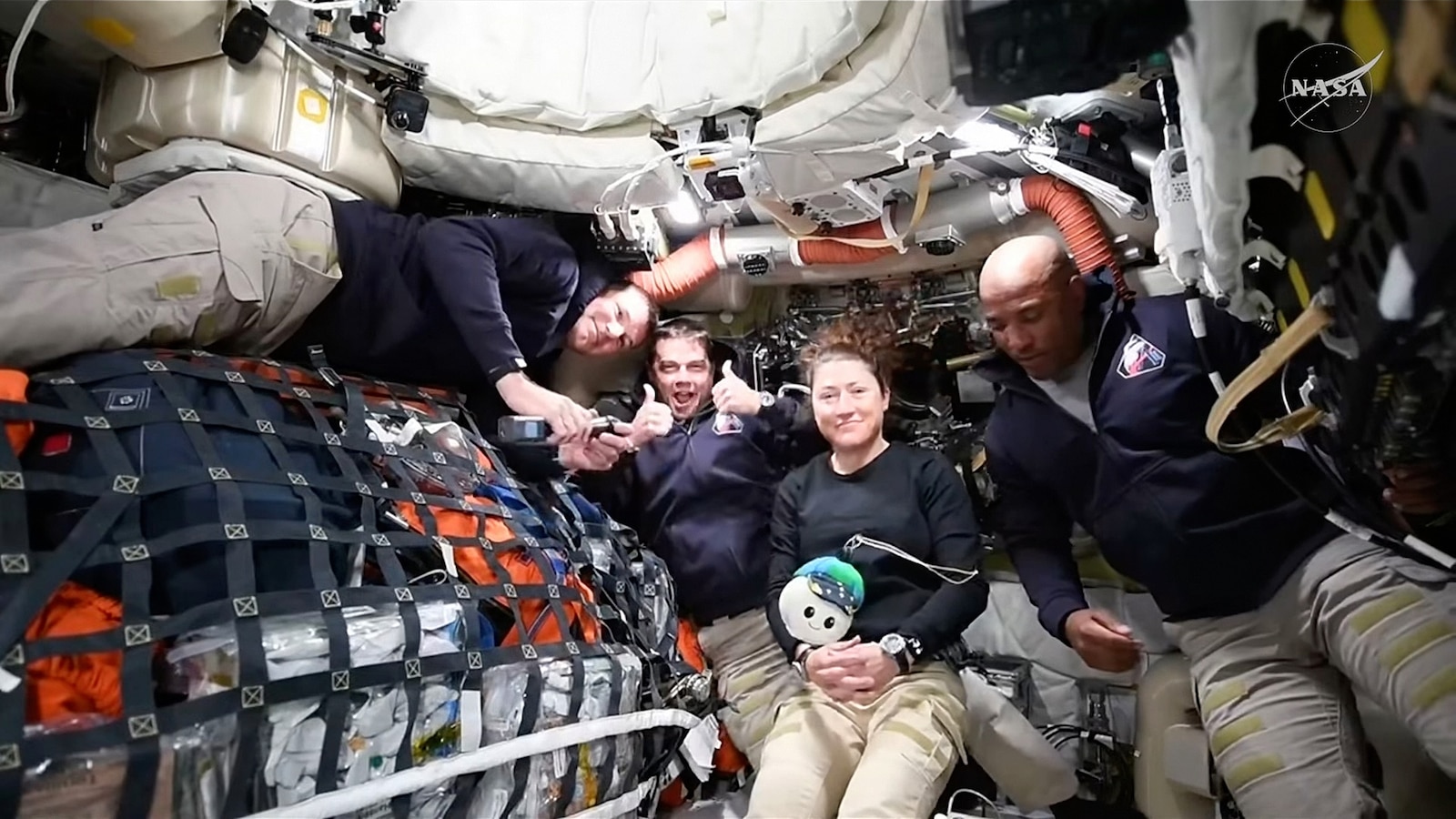
A day after lift-off, ABC News’ Gio Benitez spoke with astronauts Reid Wiseman, Victor Glover, Christina Koch and Jeremy Hansen from their Orion spacecraft about the journey so far, and what they are anticipating for the days ahead.
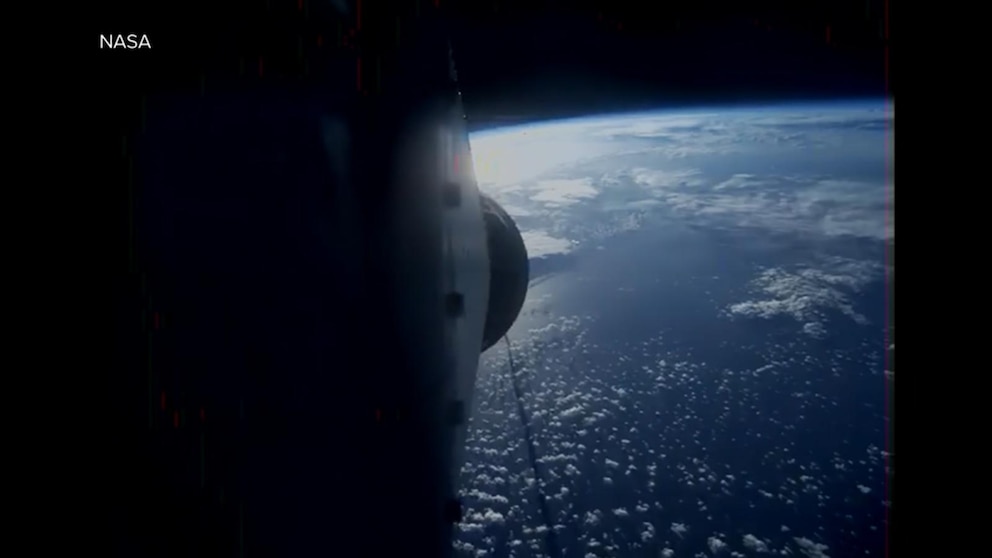
“I don’t know what we all expected to see … but you could see the entire globe, from pole to pole,” Commander Wiseman said of the crew’s view of Earth from space Thursday.

CSA astronaut Jeremy Hansen and NASA astronauts Reid Wiseman, Christina Koch, Victor Glover speak with ABC News from the Orion spacecraft as it heads to the moon, April 2, 2026.
NASA
“You could see Africa, Europe, and if you looked really close, you could see the northern lights. It was the most spectacular moment, and it paused all four of us in our tracks,” he added.
This mission marks the first time humans have flown beyond low-Earth orbit since the Apollo 17 mission that landed on the moon in 1972.
The crew is going on a 685,000-mile journey around the moon, also known as a lunar fly-by.

The Orion spacecraft begins its journey away from Earth and towards the Moon following the completed Translunar injection burn, April 2, 2026.
NASA
The launch on Wednesday was seen around the world, as the crew successfully lifted off at 6:35 p.m. ET from the Kennedy Space Center in Florida.
Hansen, mission specialist and part of the Canadian Space Agency, said that even though they were all expecting it, when the rocket boosters actually lit up and they left the launch pad, “there’s just a moment of disbelief.”

NASA’s Artemis II mission to fly by the moon, comprising of the Space Launch System rocket with the Orion crew capsule, lifts off from the Kennedy Space Center in Cape Canaveral, Florida, April 1, 2026.
Chip Somodevilla/Getty Images
“The fact that we launched — it just totally takes you by surprise, even though you’re expecting it, at least for me anyway, and just had a huge smile across my face,” he said.
Koch, a mission specialist who holds the record for the longest single spaceflight by a woman at 328 days, addressed the toilet issue onboard the spacecraft, which was reported after launch.

In this Sept. 20, 2023, file photo, Artemis II NASA astronauts (L to R) Reid Wiseman, Victor Glover, and Christina Koch, and CSA (Canadian Space Agency) astronaut Jeremy Hansen stand in the white room on the crew access arm of the mobile launcher at Launch Pad 39B as part of an integrated ground systems test at Kennedy Space Center in Florida.
Frank Michaux/NASA
“I’m proud to call myself the space plumber,” Koch said. “I like to say that it is probably the most important piece of equipment on board.”
Crew members said at the time that the Orion capsule’s toilet, dubbed the Universal Waste Management System, had a blinking fault light while they tested it, but it had been resolved since.
“So we were all breathing a sigh of relief when it turned out to be just fine,” Koch said.
CSA astronaut Jeremy Hansen and NASA astronauts Reid Wiseman, Christina Koch, Victor Glover speak with ABC News from the Orion spacecraft as it heads to the moon, April 2, 2026.
NASA
Glover, the mission pilot who will make history as the first person of color to go to the moon, said from high Earth orbit, the divisions of Earth are far out of view.
“Trust us, you look amazing, you look beautiful,” he said of Earth. “You also look like one thing. Homo sapiens is all of us, no matter where you’re from or what you look like. We’re all one people.”
“We call amazing things that humans do ‘moonshots’ for a reason, because this brought us together and showed us what we can do when we not just put our differences aside, when we bring our differences together and use all the strengths to accomplish something great,” Glover said.

The Orion spacecraft begins its journey away from Earth and towards the Moon following the completed Translunar injection burn, April 2, 2026.
NASA
Before speaking with ABC News on Thursday, the Artemis II crew successfully completed a critical milestone in the mission, the translunar injection burn that boosted the Orion spacecraft out of Earth’s orbit onto a trajectory toward the moon.
During a press conference after the maneuver, Lori Glaze, acting associate administrator at NASA, said that the critical translunar injection burn was “flawless.”
“From this point forward, the laws of orbital mechanics are going to carry our crew to the moon, around the far side and back to Earth,” Glaze said.











Leave a Reply