

President Donald Trump will address the nation Wednesday night to give an “important update” on Iran as the war continues in its fifth week.
Trump’s address is set for 9 p.m. ET on Wednesday, White House press secretary Karoline Leavitt announced.
The speech comes as the Trump administration faces questions over the war’s aims and its future.

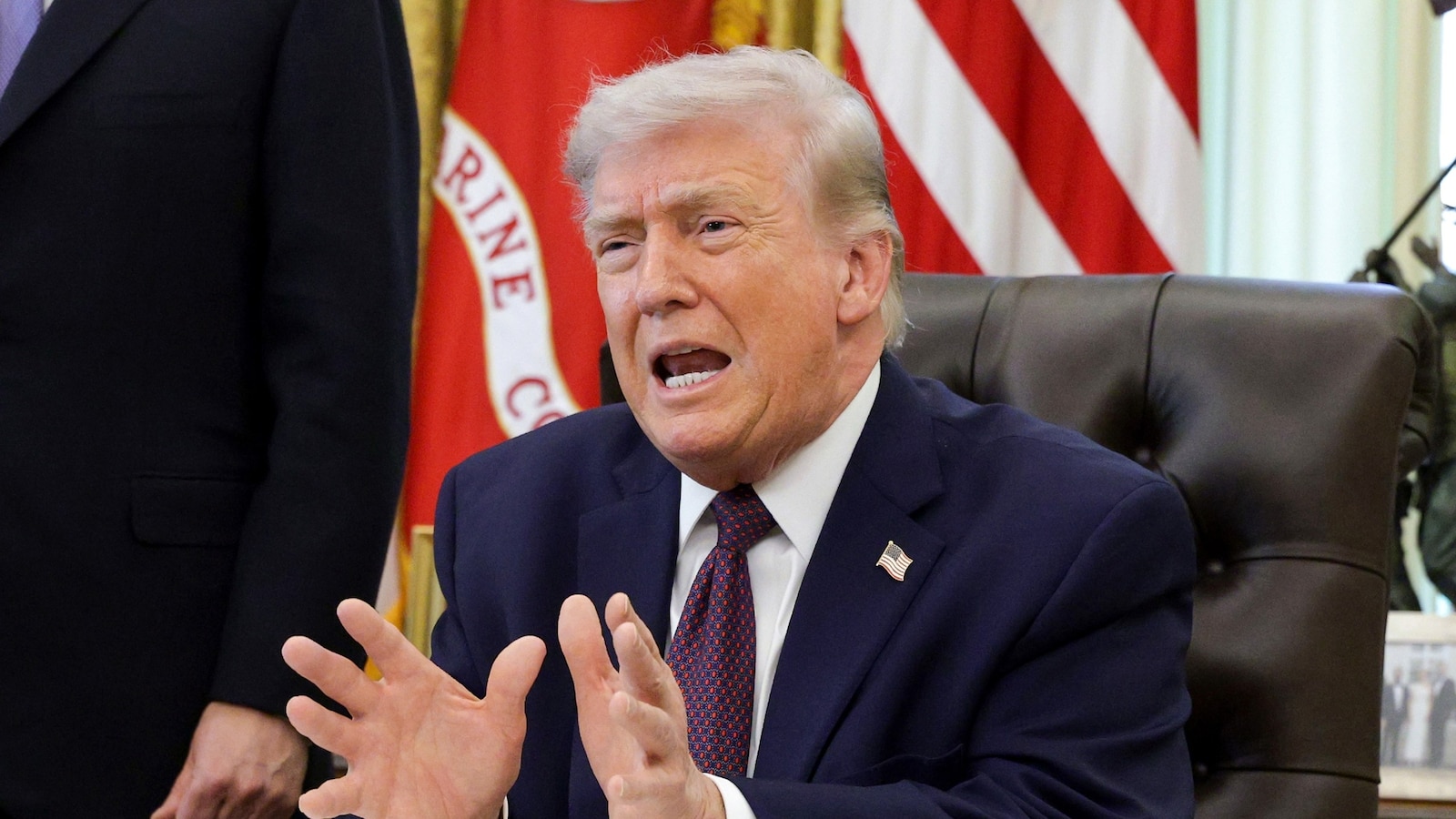
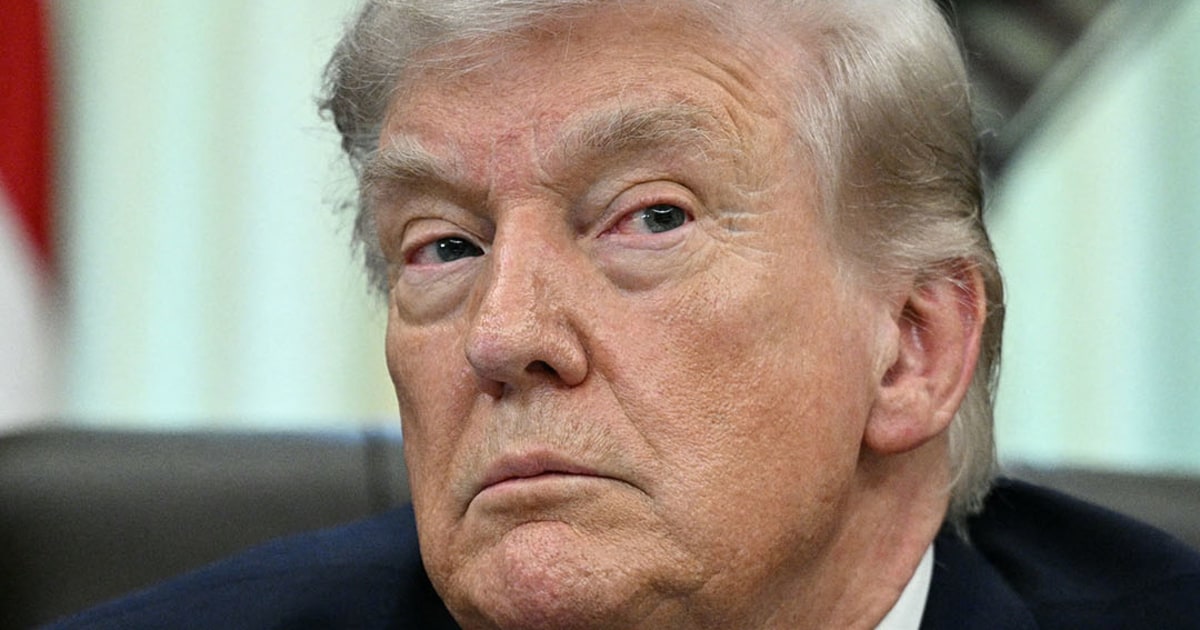
President Donald Trump speaks before signing an executive order to limit mail-in voting in the Oval Office of the White House on March 31, 2026, in Washington, D.C.
Alex Wong/Getty Images
Trump has touted the success of the U.S. operations emphasizing the destruction of Iran’s military capabilities and saying the U.S. has already achieved regime change in the country with the death of longtime Supreme Leader Ali Khamenei and a host of other political leaders.
Speaking to ABC News’ Jonathan Karl on Tuesday, Trump said “we have complete regime change now” in Iran. He said his administration is carrying out negotiations now with Iranian leaders who are “more moderate” and “much more reasonable,” citing the country’s hardline Parliament Speaker Mohammad Bagher Ghalibaf.
Ghalibaf is a former IRGC commander with close ties to the Iranian military who was responsible for brutal crackdowns on student protests during his time as police chief. Ghalibaf has also been accused of corruption during his time as mayor of Tehran, allegations he denied. Ghalibaf is said to be close to Mojtaba Khamenei, the new supreme leader of Iran and son of the former leader Ali Khamenei who was killed in February.
A month into the war, Iran is still launching missiles and drones on a regular basis, targeting neighboring Gulf countries and Israel daily.

Smoke and fire rise following an explosion in Isfahan, Iran, March 31, 2026.
Reuters
The Trump administration has also faced questions about the economic impact of the war, as oil and gas prices have surged as Iran has maintained its stranglehold on the Strait of Hormuz, which facilitates about one-fifth of global oil supply.
Prices at the pump have soared more than 30% since the war began on Feb. 28, topping $4 a gallon on average on Tuesday, AAA data showed.
Regarding the timeline for an end to the war, Trump told reporters on Tuesday it could be over in two or three weeks. He also said Iran doesn’t need to make a deal with the U.S. as a prerequisite to stopping the ongoing U.S. military operation.
“When we feel that they are for a long period of time put into the stone ages and they won’t be able to come up with a nuclear weapon, then we’ll leave,” Trump told reporters. “Whether we have a deal or not, it’s irrelevant.”
Iran reportedly responded to a 15-point peace plan which the U.S. proposed last week with its own stipulations. State broadcaster Press TV quoted an unnamed official saying these included an end to attacks and assassinations, guarantees the conflict will not be repeated and compensation for war-related damages. Iranian Foreign Minister Araghchi on Tuesday denied that Tehran had responded to the 15-point proposal or that it had provided its own list of demands.
But in a call with a European official Tuesday, Iranian President Masoud Pezeshkian indicated a willingness to end the conflict if the reported Iranian conditions were met, striking a more conciliatory tone than Araghchi, who told Al Jazeera, “We do not have any faith that negotiations with the U.S. will yield any results. The trust level is at zero.”

Oil tankers and cargo ships line up in the Strait of Hormuz as seen from Khor Fakkan, United Arab Emirates, March 11, 2026.
Altaf Qadri/AP
In recent days, Trump has also shifted responsibility for reopening the Strait of Hormuz to other nations.
“All of those countries that can’t get jet fuel because of the Strait of Hormuz, like the United Kingdom, which refused to get involved in the decapitation of Iran, I have a suggestion for you: Number 1, buy from the U.S., we have plenty, and Number 2, build up some delayed courage, go to the Strait, and just TAKE IT,” the president wrote in a post on his social media platform.
The U.S. and Israel launched massive strikes on Iran on Feb. 28. in an operation targeting military and government sites that came after weeks of talks with the Iranian regime over the country’s nuclear program.
Trump said at the start of the “major combat operations,” which occurred without congressional approval, that they were to “defend the American people by eliminating imminent threats from the Iranian regime,” and he called on the Iranian people to depose the regime.

A member of the Iranian security forces stands guard next to a banner honouring Iran’s slain supreme leader Ayatollah Ali Khamenei in Tehran, March 31, 2026
Atta Kenare/AFP via Getty Images
Iran retaliated with missile and drone strikes targeting Israel, U.S. military bases in the area and Gulf countries.
Thirteen U.S. service members have died in the war. The Pentagon said Tuesday 348 U.S. troops have been wounded.
At least 3,519 people in Iran have been killed due to the U.S.-Israeli strikes since the war began, according to the U.S.-based Human Rights Activists News Agency (HRANA). ABC News has not independently verified those numbers.
ABC News’ David Brennan and Zoe Magee contributed to this report.

Leave a Reply