

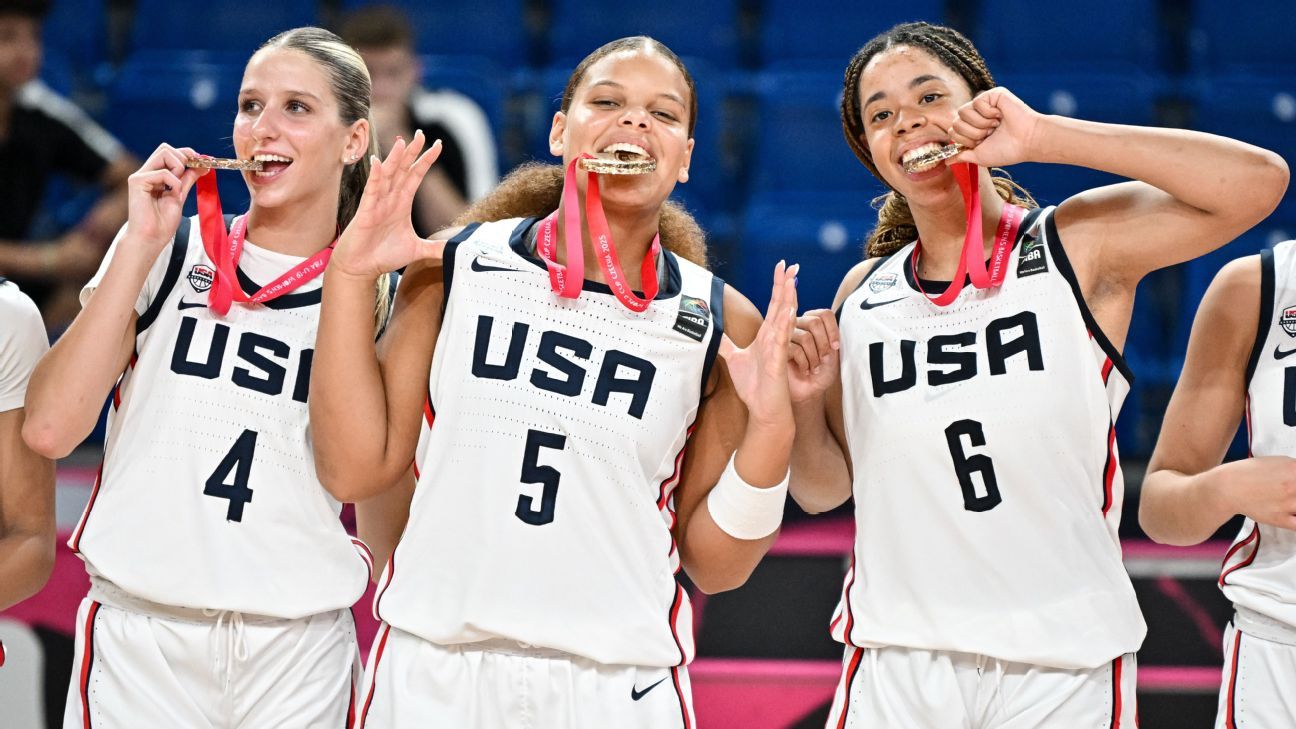
High school basketball’s biggest stage returns this weekend.
The McDonald’s All American game annually brings together the nation’s top prospects and puts them on a stage where the world can see the future of the sport. It often serves as one of the final opportunities to both evaluate and celebrate the senior high school class before those players leave for college.
The 2026 girls game features a deep and balanced group of wings, versatile forwards and positionless playmakers. Eleven All Americans have USA Basketball experience, while powerhouse programs such as Texas, Kentucky, Duke and Notre Dame are heavily represented.
Here’s everything to know about this year’s game.

Schedule
Monday, March 30
Sprite Jam Fest: A select group of All-Americans compete in the 3-point shooting, dunk and skills contests (9:30 p.m. ET, ESPN2)
Tuesday, March 31
Girls’ All-American game (7 p.m. ET, ESPN)
Boys’ All-American game (9 p.m. ET, ESPN)
All events will take place in Glendale, Arizona.

Rosters
East vs. West outlook
This year’s matchup features one of the most balanced set of rosters in recent memory.
The East brings traditional size, with Vukosa and Williams anchoring the interior, while also featuring versatile forwards such as Swords and Nyemchek, who can facilitate the offense.
The West counters with positional flexibility and athleticism. Players such as Robinson, Bjorn and Crittendon allow for larger lineups that can switch defensively and initiate offense from multiple spots.
Both teams have the ability to play big or small, and with shooting spread across the rosters, the outcome may ultimately come down to which team’s guards can control the tempo late in the game.
Three individual matchups to watch
What Spaight brings: The 5-foot-7 Texas commit, is one of the most dynamic scoring point guards in the class. She led the Nike EYBL in scoring last summer (26.3 PPG) and thrives in transition, where she creates constant pressure. Her game loosely mirrors that of undersized, high-impact guards who can carry massive scoring loads, like Hannah Hidalgo and Rori Harmon.
What Harpring brings: The North Carolina commit is a physical 5-10 guard who plays with pace and control, using strength and high basketball IQ to manipulate defenders and attack the rim. While she doesn’t pull up from the logo quite as frequently as Caitlin Clark, Harpring’s game has similar gravity due to elite court vision and pace. She could develop into a triple-double threat in the mold of Sabrina Ionescu, whose primary value lies in her high-IQ decision-making and offensive orchestration.
What we’re watching: Two very different lead guards are going up against each other in the backcourt: Spaight’s quickness versus Harpring’s size and power. Look for Harpring to defend Spaight, who can be reluctant to take catch-and-shoot 3s. Conversely, Spaight could pick up Harpring in the back court and test her left hand, redirecting her multiple times to eliminate her hallmark downhill speed and power. Harpring prefers to drive in the half court, so look for short close-outs from Spaight defensively.
What Hall brings: Hall has already proven herself internationally after earning MVP honors at the FIBA U19 World Cup while leading the United States to a gold medal. The USC commit is a powerful wing who rebounds, defends and scores through contact. She’s the premier defensive wing in the class for a reason, and her ability to pair elite on-ball defense with high-major offensive production reminds us of Jackie Young.
What Robinson brings: The South Carolina commit is an aggressive scoring guard. Her physicality and shot-creation ability make her one of the most dangerous perimeter scorers in the class. Like JuJu Watkins, she’s a powerful, scoring-minded guard who can create her own shot. She’s the focus of any defense as she causes help situations frequently.
What we’re watching: Expect two of the most competitive players in the class to demand the ball in big moments, as well as physical, confrontational drives to the rim. Each will likely look to block the other out in rebounding situations. Guarding without fouling near the rim with disciplined verticality will be key.
What Vukosa brings: The 6-4 UConn commit combines rim protection with perimeter skill. She’s an elite scoring presence who can stretch the floor, attack off the bounce and run the floor. Like former UConn post Stephanie Dolson, Vukosa could develop into a dominant rim protector and offensive hub with her ability to shoot the 3, plus her court vision and passing. Her added mobility makes her unique for a post presence at this stage.
What Edwards brings: The Tennessee commit is an explosive finisher who protects the rim and dominates the paint with a high motor. She attacks well off the bounce and has proven she is comfortable from the 3-point line. Like former UConn star Aaliyah Edwards, she excels at scoring in traffic and rebounding, while providing a reliable defensive anchor.
What we’re watching: The battle inside features two of the most intriguing post prospects in the class. Both are great examples of the modern evolution of the position. This game, in particular, will require sound defensive fundamentals from both. They won’t have the luxury of roaming the paint and shading toward the ball to deter drives. Both must also respect the other’s ability to shoot, and neither can allow the other to get loose on the offensive glass. Vukosa will have to deal with Edwards’ ability to change direction, while Edwards will have to deal with Vukosa’s strength and dexterity on drives.



Leave a Reply