


Zach Kram

Multiple Authors
Tanking is the dominant conversation in the NBA as executives across the league set their sights on the ultra-talented 2026 draft class. And for good reason: They can look at the league’s current rookie class to see how one promising young player can improve a team’s long-term outlook.
The first four players picked in the 2025 draft have been the best rookies this season, and as the regular season draws to a close, it’s time to assess the entire class.
We’ve ranked the top 10 rookies this season twice already, once in November and once in January. Note that this is a ranking of the quality of the rookies’ play this season rather than a long-term projection.
Tre Johnson (who ranked eighth in the most recent edition of these rankings) fell out of the top 10 in this edition. Kings center Maxime Raynaud, on a tear since the All-Star break, was the last player cut this time. Let’s get into the updated rankings:

January ranking: No. 10
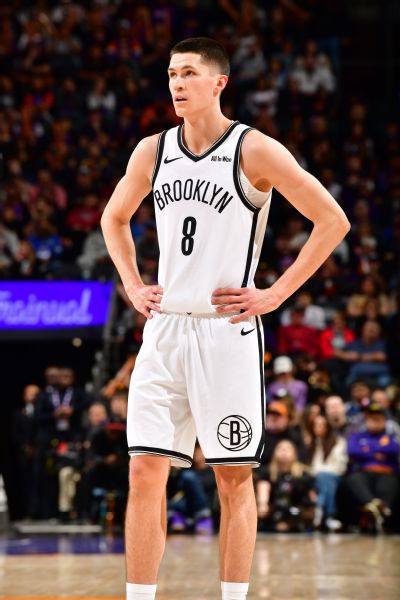
Demin’s season ended Feb. 27 due to a bout of plantar fasciitis. Before his injury, the No. 8 pick in last year’s draft showed enough flashes of talent on a struggling Brooklyn team to grab the No. 10 slot.
The biggest question about Demin coming out of college was his jump shot, as he made just 27% of his 3-pointers at BYU. But Demin made 38.5% of his 6.2 long-range attempts per game in the NBA, making him one of eight qualified rookies in league history to convert at least 38% of his 3s on at least five attempts. The others are Kon Knueppel, Keegan Murray, Tyrese Haliburton, Saddiq Bey, Tyler Herro, Landry Shamet and Rudy Fernandez. That level of shooting as a rookie isn’t a guarantee of stardom, but it’s a step in the right direction.
Otherwise, Demin showed off his advanced passing skills, and at 6-foot-8, he has the size to avoid being targeted on the defensive end. Whether Demin can expand his offensive game in his second season — he shot 39.9% from 2 — should dictate how he fits into the Nets’ plans, as they round the corner of their rebuild.
January ranking: No. 7
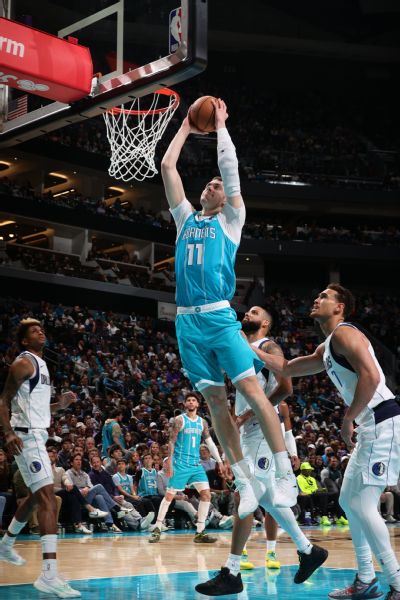
Kalkbrenner ranked fifth in the first edition of these rankings, but he hasn’t maintained his scorching statistical start. For instance, he averaged 2.6 blocks through his first nine games, but he is down to 1.3 since.
The Hornets have also played much better with Moussa Diabate manning the center position instead of the bigger, slower Kalkbrenner.
But the rookie second-rounder has still exceeded all reasonable expectations and produced one of the best seasons in his class. Kalkbrenner remains a hyperefficient scorer, with a 75% true shooting mark that would lead the league if he qualified, and his rim protection is still a plus, even if he’s no longer blocking everything in sight.
January ranking: Not ranked
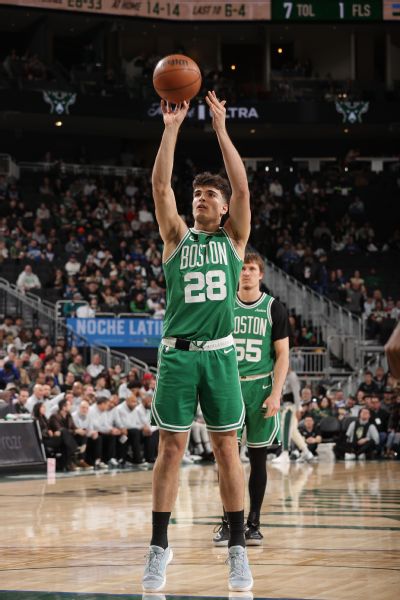
Gonzalez doesn’t rank among the most skilled rookies in this class, and his surface stats — 4.0 points, 3.5 rebounds and 0.6 assists per game — are nothing special.
But Gonzalez has one advanced stat that’s incredibly special: When he’s on the floor, the Celtics have a plus-12.6 net rating. That’s the best mark on one of the NBA’s best teams, and it’s fourth among all players with at least 50 games this season, behind only Victor Wembanyama, Shai Gilgeous-Alexander and Chet Holmgren.
Some of Gonzalez’s superlative net rating is the result of Boston’s strong depth and rotations; some is attributable to shooting luck. But at 1,009 minutes, Gonzalez’s on-floor sample is large enough that he deserves a decent amount of the credit. With his energy and defensive prowess, Gonzalez makes winning plays. He certainly doesn’t possess the highest long-term ceiling of the players on this list, but he should make the All-Rookie team.
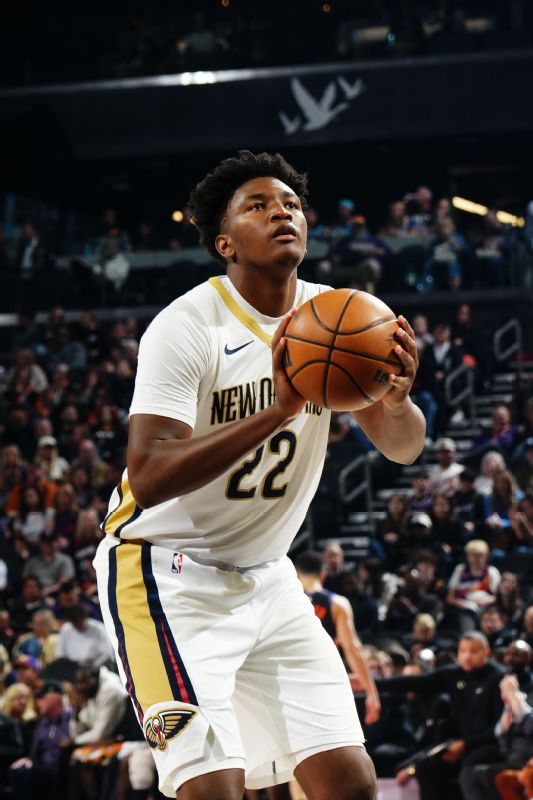
January ranking: No. 4
Queen falls in this edition of rankings because he’s hit the rookie wall the hardest. Before the All-Star break, Queen averaged 12.2 points, 7.2 rebounds and 4.1 assists in 26 minutes; since the break, he’s down to 8.5 points, 5.4 rebounds and 2.5 assists in 20 minutes.
Queen and fellow lottery pick Jeremiah Fears have the worst on/off ratings among members of New Orleans’ rotation, making Pelicans interim coach James Borrego increasingly lean away from his rookies. It’s no coincidence that the team’s best stretch of the season has come with its veterans receiving more playing time.
And yet, the No. 13 pick displayed enough playmaking upside and standout offensive moments during his midseason hot streak that he’s still an easy choice to nab a spot on the All-Rookie second team. He probably isn’t a long-term fit next to Zion Williamson — New Orleans has a negative-11.7 net rating with that duo on the floor, per databallr — which complicates his short-term future. But over the long term, he still has plenty of potential.
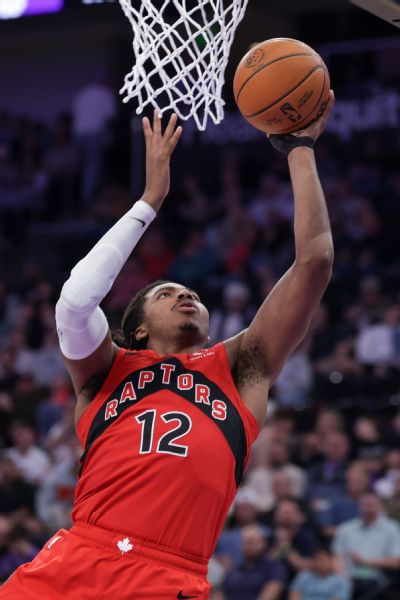
January ranking: No. 9
Murray-Boyles just returned from a nearly monthlong absence due to a thumb injury, so it might seem strange that he leapt a few spots from the last edition. But there’s a clear dividing line after the top five rookies in this class, and then a group of eight or so rookies who could be jumbled in almost any order. And Murray-Boyles pushes to the top of that second tier because he has the highest floor among the group.
It’s possible that Demin’s offense might never develop enough to be a true starting point guard, or that Gonzalez tops out as an eighth man, or that Queen’s defense sinks him. But Murray-Boyles’ size and defensive versatility mean he should be, at minimum, a solid rotation player for years to come.
The No. 9 pick could stand to expand his offensive repertoire, as he’s made just 17 total 3-pointers and 24 total unassisted shots. That weakness could place a firm ceiling on his potential. But Murray-Boyles has contributed to a contending team and fit in as a viable small-ball center as a rookie on a veteran-heavy team. That’s a bright green indicator for his future in the league.
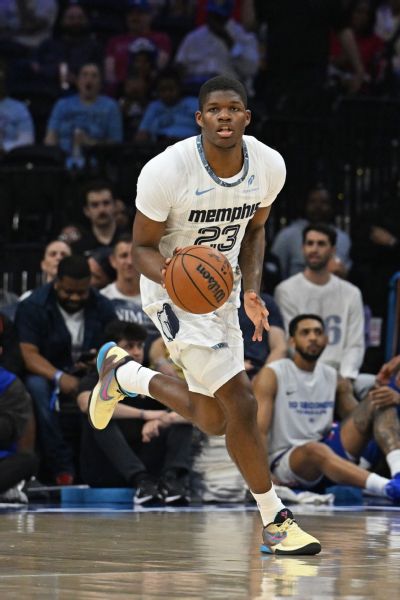
January ranking: No. 5
Coward no longer has a realistic chance to contend for a top-three Rookie of the Year finish, but he’s turned in a strong debut season, nonetheless, averaging 13.4 points, 6.2 rebounds and 2.8 assists in 26 minutes. He deserves a spot on the All-Rookie first team.
Coward has all the makings of a strong 3-and-D wing. He has the size (if not the counting stats) of a solid defender, and with his beautiful shooting form, it’s frankly a surprise that he’s fallen to 33.6% on 3-pointers — though his 85% mark from the free throw line suggests he should improve in future seasons.
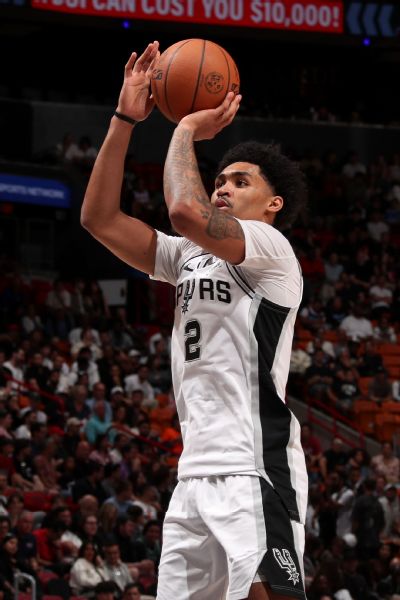
January ranking: No. 6
Following a midseason swoon, Harper has surged back into the top half of these rankings, thanks to his improved production amid increasing responsibilities for the NBA’s second-best team. Unlike several of the rookies below him on this list, Harper has actually played more since the All-Star break, even receiving his first start over the weekend, and San Antonio hasn’t slowed as the No. 2 team in the West.
From a long-term perspective, the most encouraging statistical indicator for Harper is that his 3-point percentage has ticked up to 31.4% — which is still far from ideal, but less worrisome than the 23.7% mark he toted in late January. (He’s made 43.3% of his 3s, albeit on a still low volume, since late January.) A reliable jump shot would make his backcourt partnership with former ROTY Stephon Castle more secure.
But even with shooting questions, Castle and Harper are thriving. Lineups with that duo and Victor Wembanyama playing together have a whopping plus-34.5 net rating, per databallr, albeit with extreme shooting luck in a fairly small sample.
Harper’s mini-leap over the past month has been so impressive that he nearly nudged into the top three in these rankings, but ultimately, the next player on the list has more of a full-season track record.
January ranking: No. 3
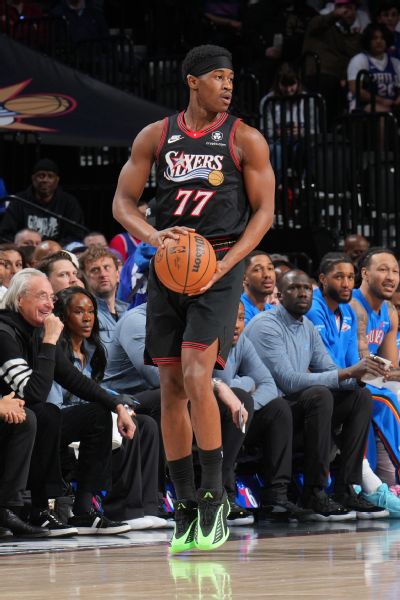
Edgecombe has contributed across the board throughout this season, but perhaps his most underrated accomplishment is surviving the grind of his first long NBA campaign. Edgecombe is playing 35 minutes per game — Scottie Barnes is the only rookie in the past decade with more playing time. Before that, the most recent rookies to average at least 35 minutes were Andrew Wiggins, Damian Lillard, Blake Griffin and John Wall.
Edgecombe’s playing time is enough to prove he looks like a future All-Star.
Fold in Edgecombe’s better-than-expected jump shot, playmaking and defensive contributions (1.4 steals, 0.6 blocks per game), and there’s every reason to expect he’ll form a potent backcourt partnership with Tyrese Maxey for years to come.
January ranking: No. 2
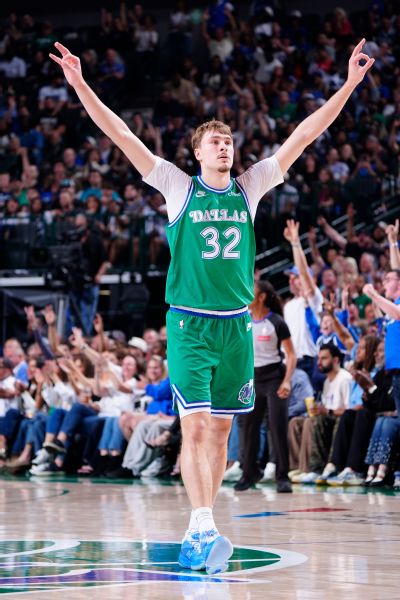
Flagg is averaging 20.3 points, 6.6 rebounds and 4.6 assists. Only seven rookies in NBA history averaged 20-6-4: Luka Doncic, Michael Jordan, Larry Bird, Sidney Wicks, Kareem Abdul-Jabbar, Oscar Robertson and Elgin Baylor.
So Flagg’s statistical profile makes him look like an inner circle Hall of Famer — and that’s not even accounting for his immense defensive potential, or the fact that he and Doncic are the only teenagers on that list.
The only reason Flagg isn’t No. 1 on this list, or the Rookie of the Year favorite, is that his former Duke teammate has been playing better this season. But that doesn’t diminish what Flagg has accomplished in a difficult campaign for the Mavericks. He looks every bit the franchise cornerstone that befits a No. 1 pick, and he would still be picked first in a 2025 redraft, one year later.
January ranking: No. 1
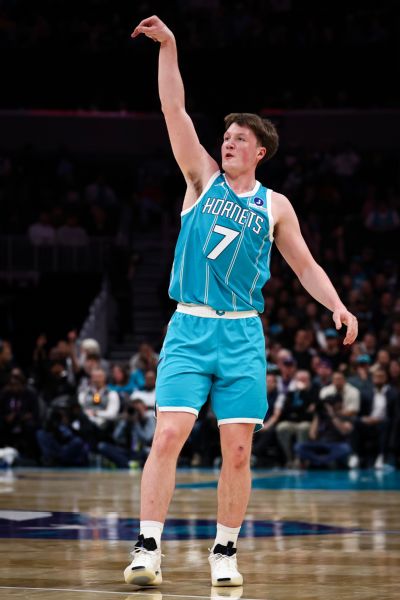
According to ESPN’s net points metric, Knueppel has contributed 153 points above average on offense this season. No other rookie is above 18.
Knueppel stands out even when compared to the entire league, not just rookies. He’s 11th overall in offensive net points; the two players directly ahead of him are Anthony Edwards and Jalen Brunson, and the two players directly behind him are Cade Cunningham and Tyrese Maxey.
Simply put, Knueppel has been one of the best players in the NBA this season. He’s leading the league in total 3-point makes. He’s third among qualified perimeter players in true shooting percentage, behind only Gilgeous-Alexander and Sam Merrill. And he’s a major contributor to a surprisingly winning team.
Knueppel should win the Rookie of the Year award, and for as well as Flagg has played, the decision shouldn’t be that close.
Leave a Reply