

The ongoing war in Iran is driving up more than just the cost of oil. With essential crop fertilizers also caught in the crossfire, U.S. food prices could be next.
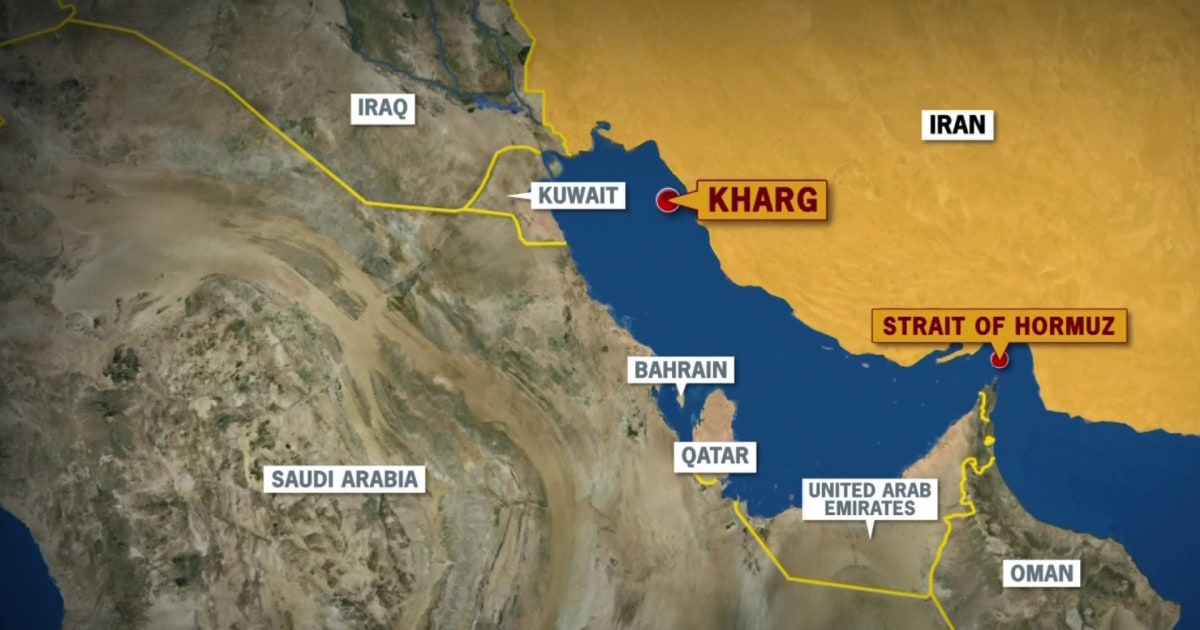
About one-third of the world’s fertilizer ingredients — key inputs farmers rely on to grow the crops that become everyday food items — transit through the Strait of Hormuz, a critical shipping chokepoint along Iran’s southern coast.
Roughly one-fifth of global oil supplies also move through the narrow waterway. Since the U.S.- Israeli attacks on Iran began Feb. 28, the strait has been effectively shut.
At least three cargo ships have come under direct attack from Iranian military forces, and there are growing fears that Iran has planted sea mines in the strait.
Facing imminent danger, shipping companies and oil tanker owners have opted not to transit the strait, and marine tracking systems show hundreds of tankers sitting idle just outside the waterway, with seemingly nowhere to go.
Oil prices have surged as a result, with U.S. crude topping $99 a barrel on Friday evening, up around 50% since the start of the war. The longer the conflict drags on, the greater the risk the disruption spreads beyond energy markets.
“A less well-recognized risk is the threat the conflict poses to the global food supply chain, which depends on exports coming through the region,” Joe Brusuelas, chief economist at RSM, wrote in a recent client note.
The Middle East plays an outsized role in fertilizer production, largely because its natural gas reserves are the primary input used to produce ammonia, a key building block for nitrogen fertilizers like urea.
Countries exposed to disruptions in the region because of the war — including Egypt, Iran, Qatar, Saudi Arabia and the United Arab Emirates — account for about 49% of global urea exports, and roughly 30% of ammonia exports, according to the American Farm Bureau Federation.
“Fertilizer markets are globally integrated, so supply disruptions in one region can influence prices and availability elsewhere,” wrote Faith Parum, a Farm Bureau economist.
That means any increases in cost or tightening of supplies overseas can quickly ripple through the global agricultural supply chain and drive up the cost of food.
For American farmers, the uncertainty is already hitting home.
John Boyd Jr., a fourth-generation farmer in Virginia who grows soybeans, corn and wheat, said his fertilizer supplier recently warned him that shipments may not arrive as expected.
“The dealers are telling me we can’t get the fertilizer,” Boyd told NBC News in an interview this week. “Due to the war and the bombing through that area, the fertilizer isn’t moving.”
Fertilizer is essential to food production, he said, and it must be applied before crops are planted.
“If I don’t apply fertilizer, that means I won’t have the yields to make my crop,” Boyd explained.
Going forward, he expects prices to rise as supplies tighten even more.
As of Mar. 10, ammonia prices in the Middle East were up 92% compared with a year earlier, while urea prices were up 70% over that same time period, Brusuelas pointed out in his note.
In the U.S., ammonia prices are currently 41% higher than they were last March, while urea prices have risen 21%.
Put simply: “Higher fertilizer costs will contribute to higher prices at U.S. supermarkets,” he wrote.
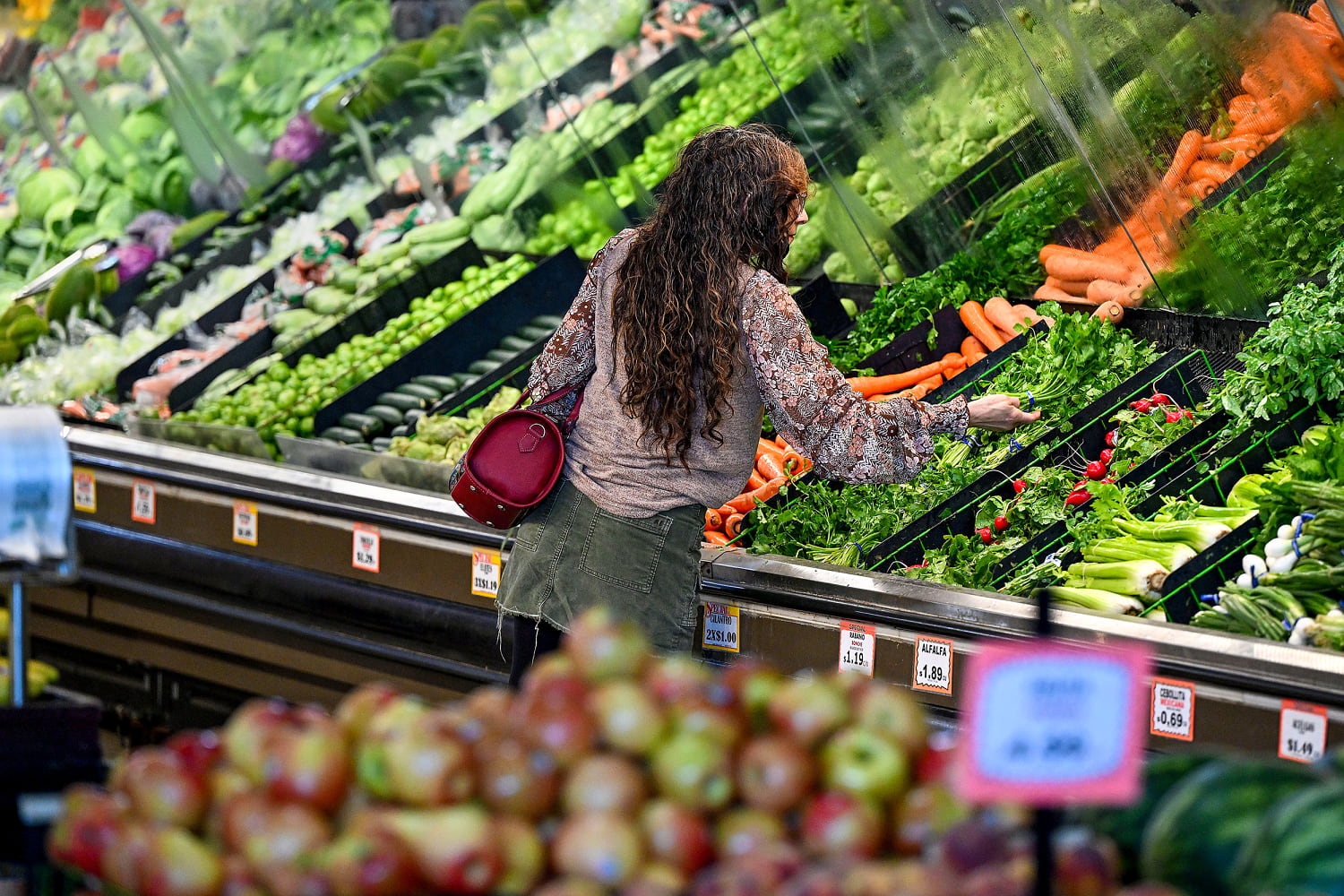
Already, food prices have been rising. According to the latest consumer inflation data released earlier this week, grocery prices rose 0.4% from January to February and are now up 2.4% compared with a year ago. The cost of dining out rose 0.3% over the same period, and is up 3.9% from a year earlier.
Now, with planting season underway, any disruption to fertilizer supplies could put additional pressure on food prices in the months ahead.
The timing is critical for U.S. agriculture. This is when farmers purchase fertilizer, prepare fields and apply nutrients needed to grow crops like corn and wheat.
“With spring planting beginning around the U.S., it is critical to secure transit, along with the necessary risk-coverage insurance, for vessels carrying fertilizers through the Strait of Hormuz,” Parum wrote.
“If farmers are unable to obtain the remaining supplies in time, we could see reductions or shifts in planted acreage and lower yields, which affects our nation’s food security and the affordability of essential goods.”
On Friday, Agriculture Secretary Brooke Rollins said the Trump administration is “very close to having an announcement on some solutions” aimed at keeping fertilizer costs down for farmers. But she did not provide additional details.
Rollins said most farmers have already purchased fertilizer for the planting season, but conceded that roughly 25% have not, leaving them far more exposed to rising prices.
“Obviously, events around the world are impacting our farmers,” she said at a White House event.
But it’s not just fertilizer. Prices are also rising for diesel, which powers tractors, irrigation systems and fertilizer spreaders.
Boyd said those higher fuel costs are already starting to squeeze his operation, in addition to the fertilizer fears.
“I have a tractor that requires 100 gallons of diesel fuel to fill it up, and it costs me $469 just for a tank of diesel fuel,” he said. “That doesn’t last long.”











Leave a Reply