

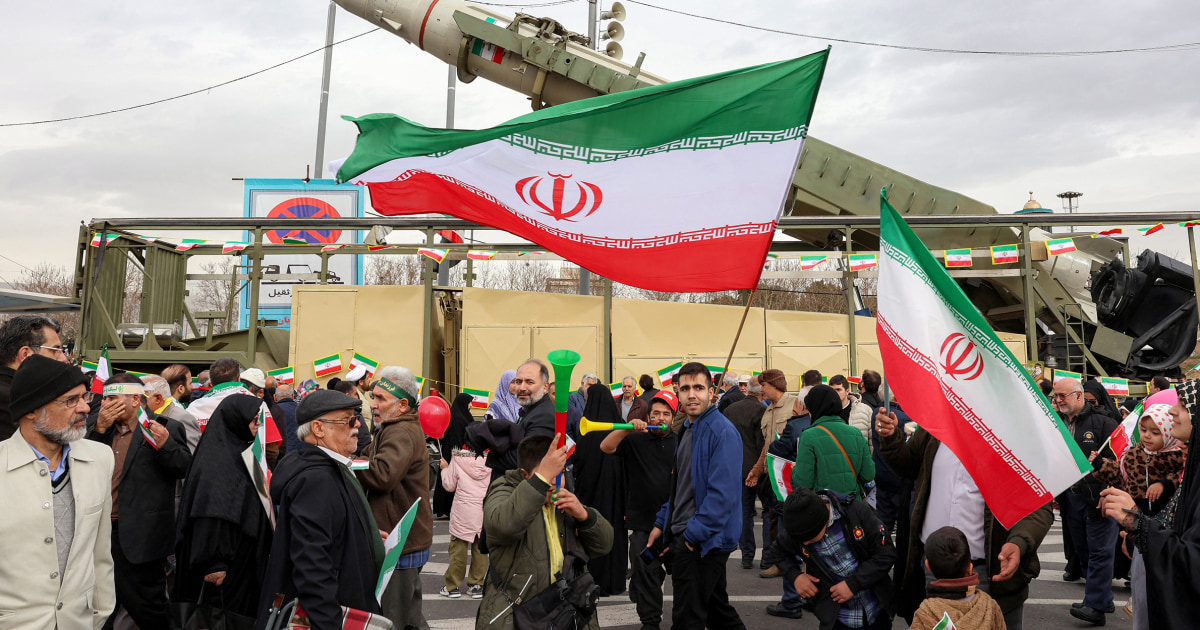
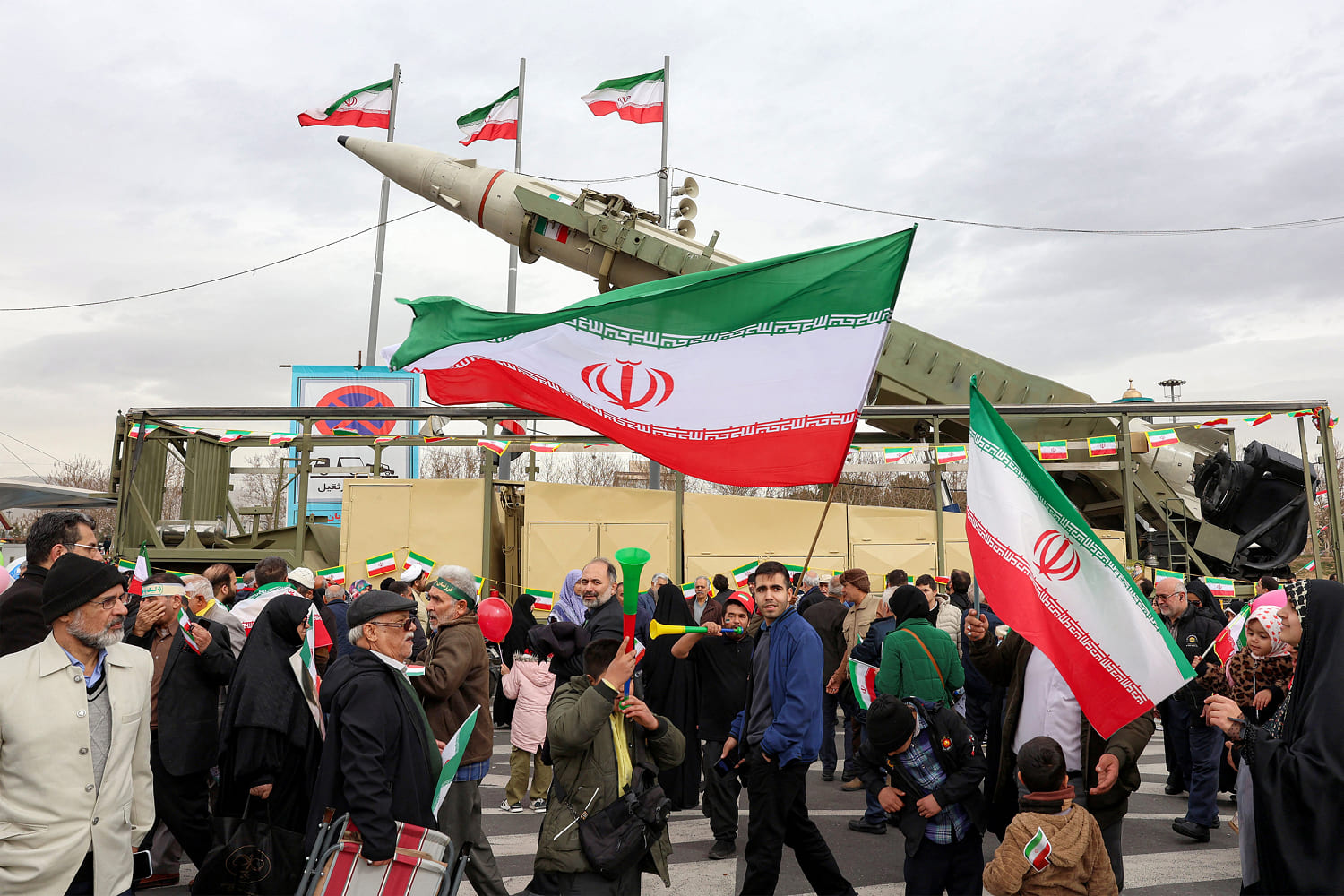
In his State of the Union address Tuesday, President Donald Trump seemed to offer another rationale for possible military action against Iran, saying it was working to develop missiles that could “soon” be able to strike the U.S.
“They’ve already developed missiles that can threaten Europe and our bases overseas, and they’re working to build missiles that will soon reach the United States of America,” he said.
It was the first time the president or any other U.S. official has portrayed Iran as poised to develop an intercontinental ballistic missile, or ICBM. Until now, U.S. intelligence agencies and European governments have said Iran could eventually build an ICBM under the cover of its military space program if it chose to.
But U.S. intelligence and military commanders have not publicly warned of an imminent threat due to a possible ICBM program.
A Defense Intelligence Agency report released last year said Iran “has space launch vehicles it could use to develop a militarily-viable ICBM by 2035 should Tehran decide to pursue the capability.”
A U.S. official told NBC News that Iran has been building toward an ICBM for years and making advances but that there was no indication of dramatic new progress.
It was not clear whether Trump’s comments Tuesday reflected the U.S. government’s having determined that Iran had, in fact, decided to pursue an ICBM or whether Tehran could now achieve that capability more quickly than had previously been assessed.
Asked how close Iran was to developing ICBM capability, Secretary of State Marco Rubio told reporters: “I won’t speculate as to how far away they are, but they are certainly trying to achieve — and this is not new — they’re trying to achieve intercontinental ballistic missiles.
“For example, you’ve seen them try to launch satellites into space,” Rubio added during a trip to the Caribbean. “You’ve seen them … increasing the range of the missiles they have now, and clearly they are headed in the pathway to one day being able to develop weapons that could reach the continental U.S.”
White House spokesperson Anna Kelly said, “President Trump is absolutely right to highlight the grave concern posed by Iran, a country that chants ‘death to America,’ possessing intercontinental ballistic missiles.”
Iran has denied it has an ICBM program, and Foreign Affairs Ministry spokesman Esmaeil Baghaei said Trump’s speech Tuesday was full of “big lies.”
Iran’s U.N. mission did not immediately respond to a request for comment.
Iran’s ballistic missile arsenal, which was bombed during a 12-day war with Israel in June, includes medium-range missiles that can travel 1,000 to 3,000 kilometers, or 621 to 1,864 miles. Those weapons would allow Iran to strike targets across the Middle East and parts of Europe.
Forecasting timelines for missile or nuclear weapons programs always poses a challenge for analysts in and outside the government, and experts disagree about how long it might take for Iran to develop an intercontinental missile.
Daryl Kimball, executive director of the nonprofit Arms Control Association, said he believes Trump’s comments about Iran’s potential pursuit of an intercontinental missile amounted to “an exaggeration.”
“Iran has ballistic missiles that can reach targets in the region,” Kimball said. “They don’t have an intercontinental ballistic missile capability, and even if they did, they don’t have a nuclear weapon to put on top that system.
“Trump seems to be seeking to exaggerate the threat posed by Iran, both in terms of the scope and the imminence,” he added.
Behnam Ben Taleblu, senior director of the Iran program at the Foundation for Defense of Democracies think tank, said it was unclear exactly how far along Iran could be toward building an ICBM. But he said Tehran has redoubled its efforts to expand its missile program, including a potential intercontinental weapon.
“Despite the setbacks imposed on the regime’s missile program through sabotage, sanctions and strikes, it continues to move ahead, even with one arm tied behind its back,” Taleblu said.
Iran renewed testing of space launch vehicles after its air war with Israel in June, Taleblu said. “Iran’s testing of at least two space launch vehicles after the 12-day war should ring the alarm bell about the regime’s intentions here,” he said.
In an interview in October with Ben Shapiro, Israeli Prime Minister Benjamin Netanyahu said Iran is developing long-range missiles that could place U.S. cities in danger.
“Iran can blackmail any American city,” Netanyahu said. “People don’t believe it. Iran is developing intercontinental missiles with a range of 8,000 kilometers; add another 3,000 and they can get to the East Coast of the U.S.”
Experts say that Iran is able to take advantage of the technical overlap between satellite launch vehicles and ballistic missile systems and that its investments in propulsion and guidance systems could pave the way to an ICBM.
U.S. intelligence agencies have warned for decades that Iran could use its military space program to build intercontinental missiles and predicted Tehran would master the technological challenge rapidly. A 1999 U.S. intelligence estimate said Iran could flight-test an ICBM that could threaten the U.S. by 2010.
In a 2024 assessment of global threats released publicly, U.S. intelligence agencies said Iran’s work on space launch vehicles could shorten the timeline to produce an ICBM if Tehran opted to develop one.
The United Kingdom, France and Germany accused Iran in a joint report in 2024 of using space launch vehicles — which put satellites into orbit — as a cover to test technologies related to ICBMs.












Leave a Reply