

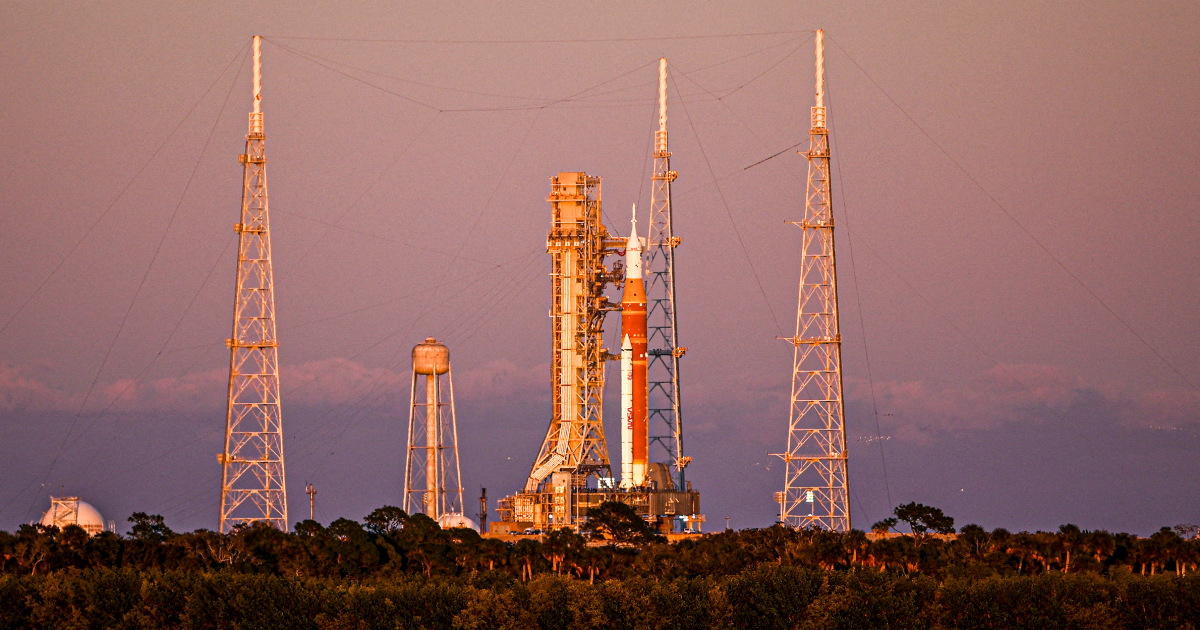
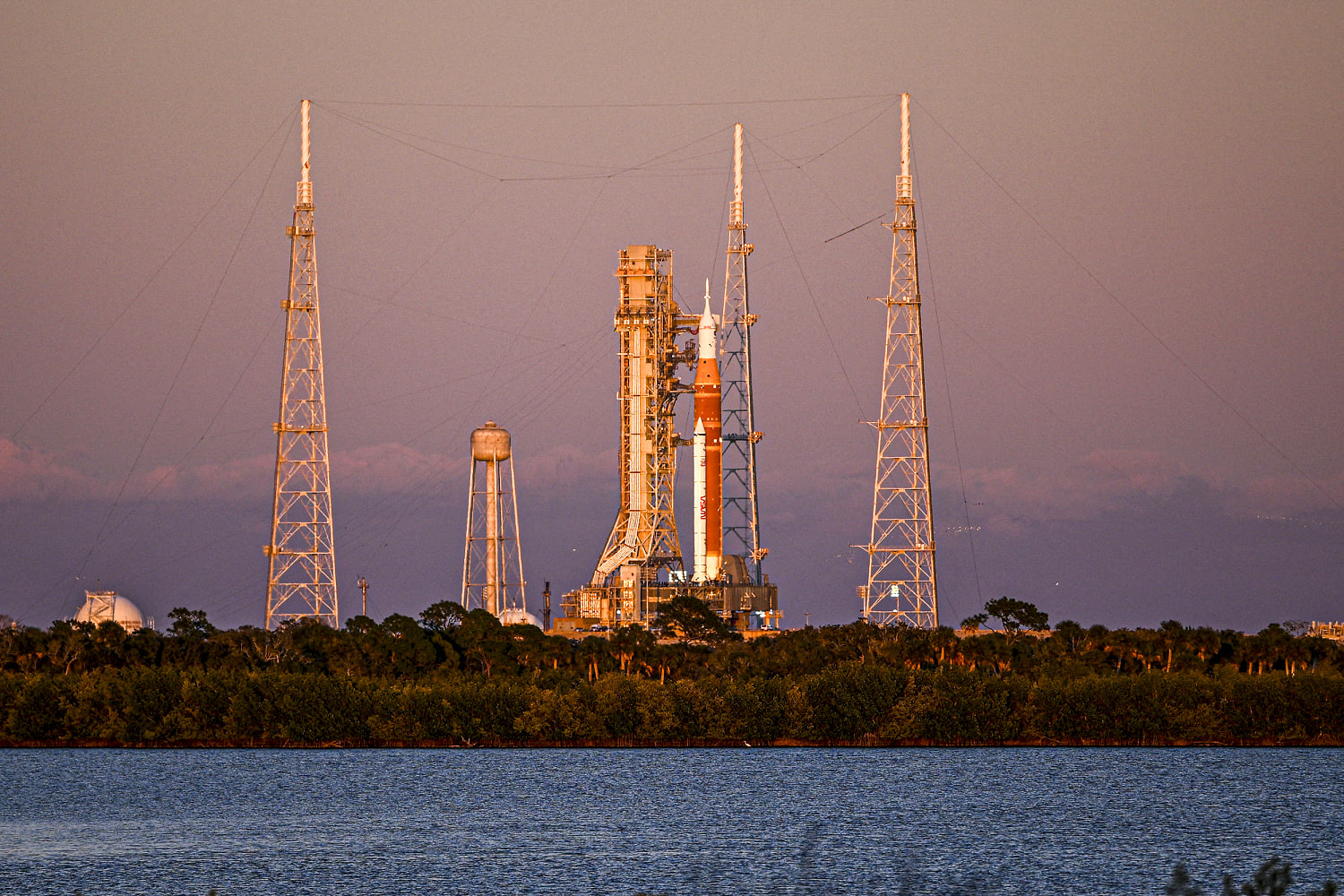
NASA on Wednesday is set to roll its enormous Space Launch System rocket back to the hangar for repairs, a move that will delay the launch of four astronauts on a long-awaited flight around the moon by at least a month.
The 322-foot-tall rocket has been sitting out at the launch pad at Florida’s Kennedy Space Center since mid-January, but engineers recently found a blockage in the flow of helium to part of the booster’s upper stage that requires further investigation.
The rollback means NASA will no longer be able to attempt to launch the Artemis II mission in March. Agency officials said they could potentially try in April, but the timeline will depend on the outcome of the repairs.
“I understand people are disappointed by this development,” NASA Administrator Jared Isaacman wrote Saturday in a post on X. “That disappointment is felt most by the team at NASA, who have been working tirelessly to prepare for this great endeavor.”
Rolling the rocket back to its hangar is a major undertaking. The 4-mile journey, which is set to begin Wednesday morning at around 9 a.m. ET, is a famously slow one, and is expected to take up to 12 hours to complete. The 11-million-pound rocket, stacked with the Orion capsule on top, will be carried on a moving platform known as a crawler-transporter that will move at a snail’s pace of around 1 mile per hour.
Once the rocket reaches the hangar, called the Vehicle Assembly Building, NASA said teams will install platforms that will allow engineers to reach where the helium flow issues were detected.
The agency said batteries in the rocket’s upper stage and in a safety mechanism known as the flight termination system will also be replaced and tested while the booster is in the Vehicle Assembly Building.













Leave a Reply