

As we near the end of the 2025-26 NBA regular season, the postseason picture is becoming clearer for not only playoff contenders but also teams at the bottom of the standings looking to turn the page.
After reaching the 2025 NBA Finals last season, the Indiana Pacers have fallen far from those heights as they suffer through an injury-plagued season. But they could land a top-five pick in June’s draft to build on their championship aspirations from last season. The Milwaukee Bucks will also be busy this offseason, with the future of Giannis Antetokounmpo being one of the biggest questions.
Our NBA insiders evaluate the 10 teams at the bottom of the standings, checking on what is new after the trade deadline and whether their draft and offseason strategy has changed.
Though it might not be their turn to raise the Larry O’Brien Trophy this June, these 10 teams will keep their sights on the NBA lottery, set to take place May 10.
Projections are based on ESPN Analytics as of Feb. 23
Jump to a likely lottery team:
Kings | Wizards | Nets
Pacers | Jazz | Hawks
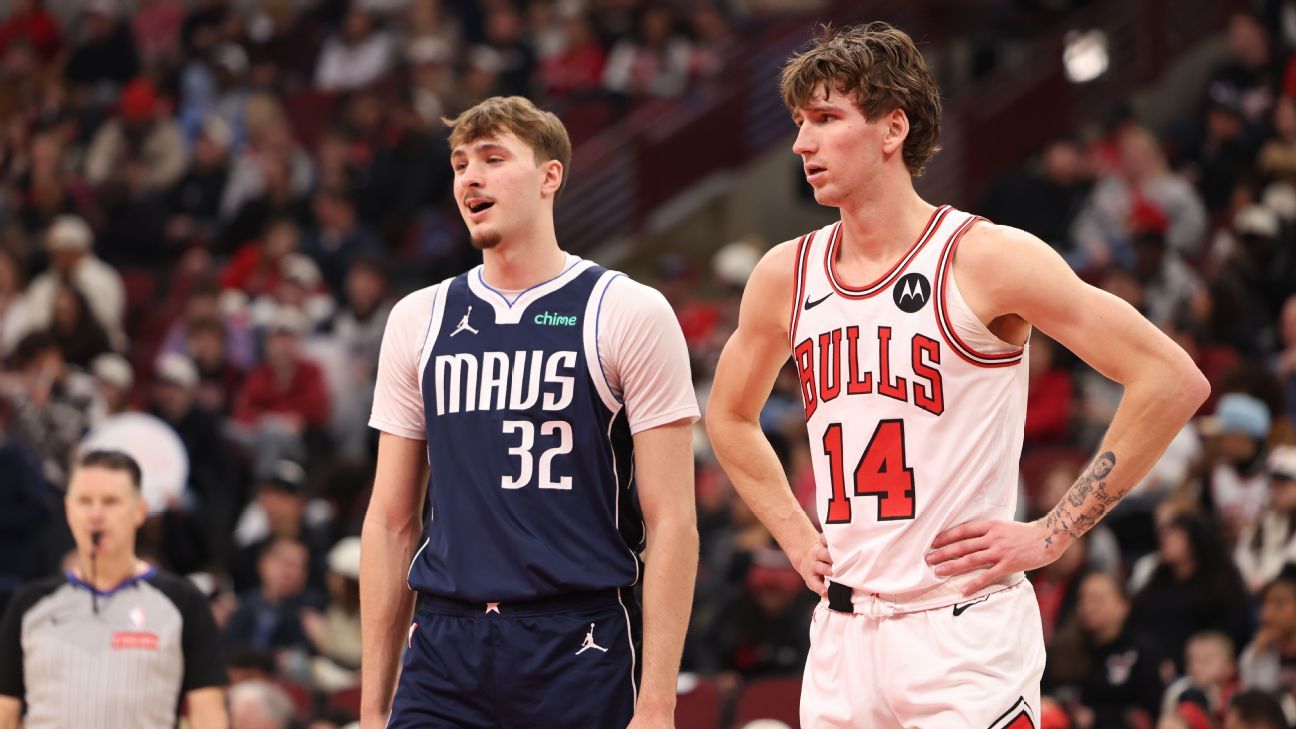
Mavericks | Bulls | Grizzlies | Bucks


What’s new after the trade deadline?
Deactivating players and a whole bunch of blowout losses. Domantas Sabonis, Zach LaVine and deadline acquisition De’Andre Hunter — three of their four highest-paid players — have all undergone season-ending surgeries in the past week. The Kings were winning only occasionally when their veterans were available, and they’ve now shifted toward a youth movement that has only spiraled their season further. They snapped a franchise-record 16-game losing streak on Monday after defeating Memphis, improving them to 4-26 on the road this season. — Anthony Slater
How have the Kings’ draft plans changed?
Sacramento is turning over an aging, expensive roster and shouldn’t be concerned about fit. Ideally, the player the Kings select this year will be a cornerstone for the next iteration of the team. The Kings’ draft board should be calibrating primarily for long-term upside and how the team wants to play down the line. The priority should be the best-available player, then figure out the rest later. — Jeremy Woo
How could Sacramento approach the offseason and free agency?
With the NBA’s worst record and the fourth-oldest roster, the Kings must prioritize youth. They can accomplish that by trading Sabonis, DeRozan and LaVine.
More importantly, Sacramento has to get its finances in order. The Hunter trade added salary to its books for next season, pushing the team over the luxury tax and likely into the second apron when factoring in a high lottery pick.
There is some financial flexibility with DeRozan’s partially guaranteed deal — his $25.7 million salary next season is protected for only $10 million. — Bobby Marks

What’s new after the trade deadline?
Will Trae Young or Anthony Davis play alongside their new teammates this season? Young has been out since Dec. 27 because of an MCL sprain and a thigh bruise, but the team announced last week he will “ramp up” basketball activities. Davis has been out since Jan. 8 as he rehabs from ligament damage in his hand. There is no timetable for his return. — Tim Bontemps
How have the Wizards’ draft plans changed?
Young’s presence is the main consideration because it might (and should) prevent Washington from targeting a true point guard in the draft. Young and his max contract are expected to be in the fold for the foreseeable future, which likely rules out players such as Kingston Flemings (Houston), Darius Acuff (Arkansas) and Mikel Brown (Louisville) from Washington’s plans. — Woo
2:37
Rich Eisen breaks down Anthony Davis’ trade to the Wizards
Rich Eisen reacts to the breaking news that Anthony Davis has been traded to the Washington Wizards.
How could Washington approach the offseason and free agency?
Washington started free agency five months early, trading for former All-Stars Young and Davis. With the Wizards’ cap space diminished, the emphasis this summer will be on getting both players healthy and acquainted with their new teammates.
Washington’s focus this offseason will be on the next contracts for Young, Davis and 2023 lottery pick Bilal Coulibaly. Young has a $49 million player option and could opt in and extend. He can also become a free agent and sign for less money but with guaranteed years attached. On Aug. 6, Davis will become eligible to sign a four-year extension. Coulibaly can extend his deal up to the last day of the regular season. — Marks

What’s new after the trade deadline?
Releasing Cam Thomas clears up confusion about his future. And though general manager Sean Marks kept all five first-round picks in 2025, hoping they could all be immediate contributors, it hasn’t worked out. But now, the Nets don’t have to race to the bottom. Their cap sheet has stayed clean (lowest salary in the league), and they’ll use that space, along with their young roster, to get better by making trades. In the meantime, Nolan Traore and Egor Demin are playing pressure-free basketball, and the team is looking toward a generational draft in June. — Vincent Goodwill
How have the Nets’ draft plans changed?
Brooklyn made five first-round picks last year and has gotten intriguing early returns from Demin and Traore. The Nets heavily add rookies with positional size who share the ball, and they need a top talent to tie it together. The Nets have quite a bit riding on this lottery as a result. Adding a top pick such as Darryn Peterson (Kansas) or AJ Dybantsa (BYU) to this group would make this roster quite interesting. — Woo
How could Brooklyn approach the offseason and free agency?
Besides the continued development of six players on first-round rookie deals, the Nets have a decision on Michael Porter Jr.’s $40.8 million expiring contract. Porter, a free agent in 2027, is eligible to sign a four-year extension.
The Nets join the Chicago Bulls and Los Angeles Lakers as the only teams projected to have cap space this offseason. Brooklyn could have up to $50 million in room and could use it two ways: put an offer sheet down on a player, such as restricted free agent Peyton Watson, or use the room and its nine tradable first-round picks (and 19 second-rounders) in a trade. — Marks

What’s new after the trade deadline?
The Pacers found their center of the future, acquiring Ivica Zubac from the LA Clippers in a move that should position them nicely next season. It’s unlikely Zubac will make an impact for the rest of this campaign, however, as the team has held him out since the deadline to recover from an ankle injury. The Pacers dealt their 2026 first-round pick to land Zubac, but the selection is top-four protected. It gives Indy an incentive to improve its lottery odds this year before the team attempts another championship run next season. — Jamal Collier
How have the Pacers’ draft plans changed?
If the Pacers’ pick lands in the top four, it would be a major coup for Indy after its risky move to acquire Zubac. The four top players on our board — Darryn Peterson, AJ Dybantsa, Cameron Boozer (Duke) and Caleb Wilson (UNC) — would all fit well in Indy and help kick-start another playoff push with Tyrese Haliburton back next season. The thought of pairing Peterson and Haliburton in a supercharged backcourt is particularly tantalizing. — Woo
How could Indiana approach the offseason and free agency?
Other than retaining their first-round pick, a healthy Haliburton will be the most impactful addition to the Pacers’ roster.
After adding Zubac at the deadline, Indiana has 13 players under contract and is $2.8 million below the luxury tax. If the Pacers retain their first-round pick, they will be a luxury tax team and likely be over the first apron. Indiana keeps the pick if it lands 1-4 or 10-30.
Indiana will have eight players eligible to extend their contracts this summer, including Haliburton and Pascal Siakam. — Marks

What’s new after the trade deadline?
The Jazz took a big swing in “pre-agency” by pulling off a surprising blockbuster deal to land Jaren Jackson Jr. The trade eliminated any doubt about Utah’s intent to end its long rebuilding process by making a significant leap to competitiveness next season. The Jazz gave up three first-round picks in the deal, including their own in 2027, a steep price the Utah front office decided was worth it to acquire a former Defensive Player of the Year entering his prime. — Tim MacMahon
How have the Jazz’s draft plans changed?
With the Jazz clearly positioned to compete next season, this will be their best lottery swing for a while. They appear set in the frontcourt with Jackson, Lauri Markkanen and pending restricted free agent Walker Kessler, but should draft the player who best raises their long-term ceiling. Considering the number of quality guards in this class, the pick could be an interesting referendum on Utah’s feelings about Keyonte George, who is much improved and extension-eligible this year, but more of a natural scorer than a true point guard. — Woo
1:40
Windhorst: Jazz tanking more ‘egregious,’ but still within the rules
Brian Windhorst chimes in on accusations that the Utah Jazz have been “tanking” late in games and says they’re not the only franchise doing it.
How could Utah approach the offseason and free agency?
Similar to the Wizards, the Jazz turned cap space this summer into a star forward. Their attention will now turn to Kessler and George.
Kessler is a restricted free agent after both sides failed to get an extension done before the start of the season. But the Jazz already have invested 68% of next season’s payroll into Jackson and Markkanen.
George, whose breakout season has put him in contention for Most Improved Player honors, is eligible to sign an extension until the last day of the regular season. — Marks

What’s new after the trade deadline?
The Hawks reshuffled their roster, sending out Luke Kennard and Kristaps Porzingis while bringing in Jock Landale, Buddy Hield and Jonathan Kuminga as they try to advance out of the East play-in for the first time since 2023. Atlanta will also wait to see where the Pelicans and Bucks wind up in the standings. The Hawks will get the better of those teams’ picks. — Bontemps
How have the Hawks’ draft plans changed?
The Hawks are set to capitalize after trading the rights to Derik Queen for this selection (the better of New Orleans and Milwaukee). Atlanta has a young team and relatively clean cap sheet that should allow the team to target the best available blue-chip rookie. The most obvious area of need is point guard, after the Hawks traded Trae Young to Washington. They could select a dynamic handler such as Kingston Flemings or Keaton Wagler, even if Atlanta doesn’t pick at the top of the draft. — Woo
How could Atlanta approach the offseason and free agency?
The Hawks must decide whether they want to operate as a team with cap space or go over the threshold. To create room, Atlanta would need to decline Kuminga’s $24.3 million team option. The move would create $30 million in cap space.
If Kuminga returns, Atlanta would still be positioned to add in free agency thanks to its $15 million non-taxpayer midlevel exception. An offseason priority will be to add size to its frontcourt. — Marks

What’s new after the trade deadline?
The Mavs gave up Anthony Davis in what was essentially a salary dump a year after he was the centerpiece in the return of the disastrous Luka Doncic deal. Dallas’ interim co-GMs also shed another combined $12 million in salary next season by including guards D’Angelo Russell and Jaden Hardy in the trade with the Wizards, who sent middling draft compensation and expiring contracts to the Mavs. Dallas has some financial flexibility to begin what it hopes will be a quick rebuild around rookie Cooper Flagg. — MacMahon
How have the Mavericks’ draft plans changed?
Dallas doesn’t control its picks for the foreseeable future, making this a key juncture to find the right running mate for the ascending Flagg. The Mavs should be thinking hard about this point guard class, with several potential long-term starters available, depending on where Dallas falls in the lottery. — Woo
How could Dallas approach the offseason and free agency?
Trading Davis improved the Mavericks’ financial outlook. Once a projected luxury tax and second-apron team, Dallas is now well below both thresholds. The focus will be on evaluating the roster and determining who fits around Flagg.
Kyrie Irving is expected to return and has two years left on his contract ($39.4 million and $42.4 million), while Klay Thompson is on an expiring contract. Expect Dallas to be proactive in talks with Max Christie, who is eligible to extend his contract for four seasons and $92.8 million. — Marks

What’s new after the trade deadline?
The Bulls dismantled their roster at the deadline, moving on from seven players while stacking second-round picks and taking chances on a few new young players — a true rebuilding effort from a team that had been content to chase the play-in tournament. Yet, the Bulls are winless since the trade deadline and have lost nine in a row since the start of February. Since getting above .500 at 23-22 on Jan. 25, the Bulls have gone 1-12, falling out of the postseason race and shifting their focus to better lottery odds for a franchise that has lost in the play-in tournament three consecutive seasons. — Collier
How have the Bulls’ draft plans changed?
Chicago picked a direction at the deadline and churned their roster with an eye on adding through this lottery. The Bulls have selected versatile forwards in Matas Buzelis and Noa Essengue in the past two drafts and should be seeking guard help in the lottery, despite their financial commitment to Josh Giddey as a lead ball handler. Needs aside, Chicago should be swinging for upside as they build out a younger core. — Woo
How could Chicago approach the offseason and free agency?
Chicago has the spending power to accelerate its rebuild, or it could take a conservative approach this summer, picking up draft assets and unwanted salary. If the Bulls do not sign any of their free agents, they could have up to $60 million in room. To reach the minimum floor, they are required to spend at least $44 million by the first day of the regular season. They could have nearly $100 million in cap space in 2027. — Marks

What’s new after the trade deadline?
One of the NBA’s most promising young cores has been dismantled. Memphis traded Desmond Bane over the summer and moved Jaren Jackson Jr. at the trade deadline, leaving star point guard Ja Morant as the last remaining player from that era. The Grizzlies recently pushed back Morant’s potential return from a sprained ulnar collateral ligament in his left elbow and plan to evaluate him in about two weeks. Morant needs to play to restore his potential trade value. It’s clear a new youth movement is afoot in Memphis that includes Cedric Coward, Jaylen Wells and the injured Zach Edey. — Michael C. Wright
How have the Grizzlies’ draft plans changed?
Under Zach Kleiman, Memphis has valued building through the draft. Nabbing a top pick this year would be a significant coup as the Grizzlies continue to pivot the roster. Morant’s future might weigh into their draft decision to some extent, considering the number of talented point guard prospects in this year’s draft. Where the pick falls will play a role in that, but guards such as Darius Acuff and Mikel Brown Jr. could still be available to them in the back half of the top 10. — Woo
1:33
Windy: Ja Morant has ‘negative value’
Brian Windhorst breaks down why teams were not willing to take a chance on Ja Morant at the trade deadline.
How could Memphis approach the offseason and free agency?
The goal will be to find a new home for Morant, who will enter the summer with two years remaining on his contract ($42.2 million and $44.9 million).
Trading Bane and Jackson has netted the Grizzlies seven future first-round picks, and they are in a good financial position with no player other than Morant earning more than $22 million per season.
One player to watch is Kentavious Caldwell-Pope, who will miss the remainder of the season because of pinkie surgery. He has a $21.6 million player option for 2026-27. — Marks

What’s new after the trade deadline?
Giannis Antetokounmpo remains a member of the Bucks, and the front office will take every opportunity to convince him that he can win again in Milwaukee. The Bucks have held their own in Antetokounmpo’s absence — 6-2 in their past eight games — to remain within striking distance of the play-in tournament. Plus, Milwaukee signed Cam Thomas as a free agent to help their scoring woes. Unlike other teams on this list, the Bucks still believe they can make one more run at the postseason, especially once Antetokounmpo returns from injury. — Collier
How have the Bucks’ draft plans changed?
The Bucks will get the worst of their own pick and New Orleans’, which means for Milwaukee to select in the top four, both of those selections have to jump. That scenario is wishful thinking, but Milwaukee still has an important opportunity to add to the roster with this selection. There is a glaring need in the backcourt, no matter what happens with Antetokounmpo. — Woo
2:22
Stephen A.: Luka-Giannis on Lakers highly unlikely, but can never say never
While Stephen A. Smith doesn’t believe Giannis Antetokounmpo and Luka Doncic teaming up with the Lakers will happen, he explains why it can’t be completely ruled out.
How could Milwaukee approach the offseason and free agency?
The offseason will center on what happens with Antetokounmpo. The Bucks will add a valuable 2026 first-round pick to their list of tradable assets, and they can also trade first-rounders in 2031 and 2033 and swap picks in 2031, 2032 and 2033. Convincing Antetokounmpo to sign an extension in the fall — he becomes eligible Oct. 1 — could depend on where June’s pick lands and whether the franchise plans to use those picks in a deal to try to improve the roster.
Improving via free agency could prove more difficult. Milwaukee will have nine free agents this summer, five with player options (Kevin Porter Jr., Gary Trent Jr., Gary Harris, Taurean Prince and Jericho Sims). The Bucks are also projected to be over the cap, thanks in part to signing center Myles Turner last offseason and owing Damian Lillard $20.2 million per season through 2029-30 after waiving and stretching his contract.
Outside of using Turner’s, Kyle Kuzma’s or Bobby Portis’ contracts in a trade, Milwaukee will have the $15.1 million non-taxpayer midlevel, $5.5 million biannual and veteran minimum exceptions available to sign players. — Marks
Leave a Reply