

:max_bytes(150000):strip_icc():format(jpeg)/modern-dormer-bath-slate-shower-102593906-34aade1a16c64452876c5286b530d408.jpg)
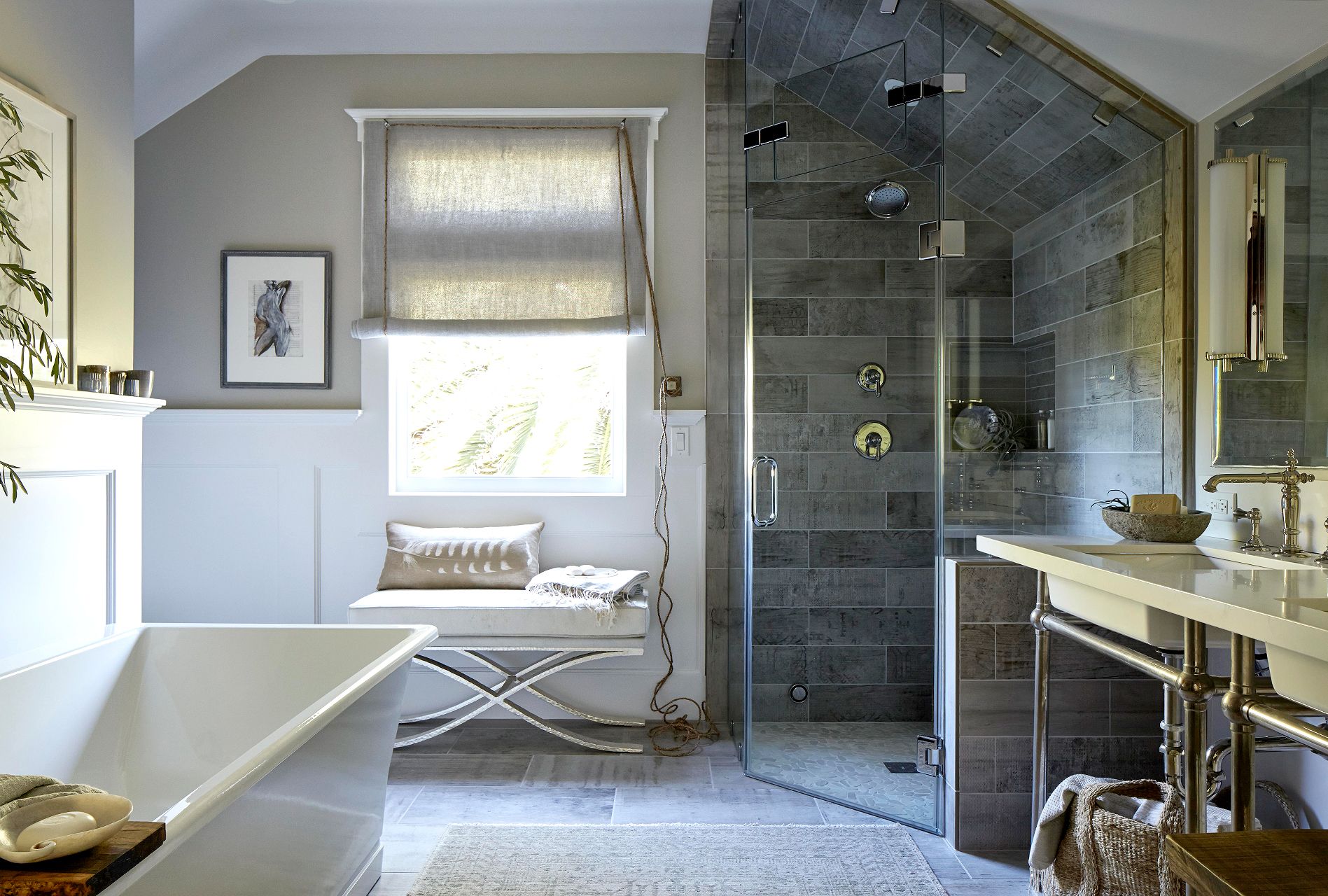
Tile drenching is the new trend taking over bathroom design. Instead of the standard use of tile on walls or floors, the trend extends it to the ceiling for a more immersive feel. In doing so, it echoes the widely used color-drenching paint technique, which extends the color beyond walls to trim, doors, and ceilings.
Interior designers love the tile-drenched look, both for its visual effect and its practicality. “Tile drenching is one of the best ways to achieve a dramatic and high-end look,” says Reanna Channer, founder of Seattle-area interior design studio Design to Elevate.
What Is Tile Drenching?
Similar to color drenching, tile drenching elevates bathroom tiles—literally—by extending their use to ceilings, walls, and floors. The possibilities are endless, from using the same tile shape, color, material, and arrangement throughout to varying the tiles for a layered look. While tile drenching is similar to its paint-themed predecessor, designers note a difference.
“It takes more courage than color drenching with paint, which is why this design trend will wow for years to come,” says Lindsay Thornton, an interior designer and the founder of the Toronto-based firm Cornerstone Design & Build. While painting is a relatively quick, easy, and inexpensive way to update a bathroom, tiling the entire space can be a significant financial investment due to the labor and materials required.
Werner Straube
Why Tile Drenching Is Popular Now
“Clients are understanding the value of investing in design more than ever, so it makes sense that tile drenching has become a trend,” says Caroline Kopp, the founder of Caroline Kopp Interior Design in Westport, Connecticut. The trend also reflects the design pendulum moving toward more unique, personalized spaces, as it lends itself well to a fun palette of tile shapes, colors, and materials.
While many trends are fun but not functional, tile drenching is highly practical. Kopp notes that limiting tile use to floors or walls was often done to save money, but a bathroom can always benefit from more tile, not less, for waterproofing reasons. “What I love most about this trend is its practicality,” Channer says. Tile is easier to clean than painted drywall, and the designer points out that both drywall and wood walls are often susceptible to water damage and prone to mold and mildew. “Tile is the best defense!” Channer says.
9 Designer Tips to Pull Off Tile-Drenching
Today, designers are sharing their thoughts on the high-impact trend, why it is popular, and tips for pulling it off in your own space.
1. Vary Tile Sizes, Shapes, and Colors
“The key to tile drenching is to use a combination of tile sizes, shapes, and colors. With so many beautiful tile options available to mix things up, this is such a fun design opportunity to personalize and customize your space,” Channer says. The designer suggests mixing natural stone with ceramic, or pairing a matte-finished tile with a glazed one, for a touch of understated elegance.
Channer encourages people to play with patterns when tile drenching a bathroom. “Use a striking tile pattern on the floors with large-format tiles on the walls,” the designer suggests. As for the tile colors, she recommends introducing a contrasting color in the shower or a mosaic accent tile on the shower floor and in the shampoo niche.
2. Opt for Natural Stone
When it comes to choosing a material for tile drenching a bathroom, Kopp’s pick is natural stone. “For me, natural stone will always be the most desirable bathroom surface, and it lends itself well to tile drenching. You get the dramatic effect of a lot of stone without the cost of a real slab,” the designer says.
3. Use Large-Scale Tile for a Modern Look
“For a modern look, opt for a large format tile (24×48-inches or bigger) that has a honed or slip-resistant finish,” Thornton says. The designer explains that visually, the intentional repetition of the large-scale tile creates a spa-like envelope, while the honed surface enables safety when the tile is wet.
4. Go for a Bold Statement with Zellige Tiles
Zellige tiles are everywhere right now and lend themselves well to tile drenching. “This is a traditional Moroccan hand-glazed tile known for its uneven texture, color, and luminosity that creates impact and intrigue,” says R. Jane Morgan, the founder of Chicago-based R. Jane Morgan Interior + Design. If you want to go bold with tile drenching, Morgan says Zellige tiles are the ultimate way to inject the “wow” factor.
5. Pick Easy-to-Clean Tile
If tile is going to cover the bathroom walls, floors, and ceilings, you’ll want to choose an easy-to-clean option. According to Krista Shugars, interior designer and founder of Maryland-based KD Designs Custom Interiors, bigger is always better here. “The larger the tile, the easier it is to clean due to fewer grout lines,” she says. As for the material, Shugars says porcelain tiles are durable, non-porous, and stain-resistant.
6. Mix Tile Finishes
If you’re aiming to steer your bathroom design toward a more traditional look, Thornton recommends mixing tile finishes in the space. “Opt for a tile that comes in both polished and matte, so you can wrap the walls in the beauty of a polished marble, while preventing a fall by using a honed hexagon format of the same marble on the floor,” she says.
7. Always Use Matte Tiles on Floors
Given a bathroom’s high humidity and constant exposure to water, Shugars says it’s paramount to select a matte-finish tile for the floors. “Any tile going on the floor, whether that be the shower floor or actual bathroom floor, needs to have a matte finish for its superior slip-resistance properties,” Shugars advises.
8. Stick with the Same Tile
“Tile drenching gives permission to stick with one tile that you love and slather it everywhere instead of trying to fit in too many tiles into one space,” says Jennifer Beget, a designer and the founder of J Beget Designs in Scottsdale, Arizona.
If you plan to use the same tile on walls, floors, and ceiling, Beget recommends using smaller tiles, such as 2×6-inch, 4×4-inch, or 4×16-inch. If you’re going for the designer look, this is the way to do it. “It’s design-heavy to use smaller format tiles such as Zellige tile or any type of handmade or hand-painted tile, which are such true beauties on their own,” the designer says.
9. Highlight the Shower with a Contrasting Tile
Tile drenching a bathroom doesn’t mean the entire space needs to be covered with the same tile type. Morgan recommends varying the tile types you use, such as marble, porcelain, glass, or terrazzo. In addition to adding visual interest and contrast, varying the tile layout can turn one area of the bathroom, such as a walk-in shower, into a stunning focal point. “Consider treating the shower area as one space and the rest of the bathroom as a separate space, always ensuring there is a cohesive transition,” Morgan says.





Leave a Reply