

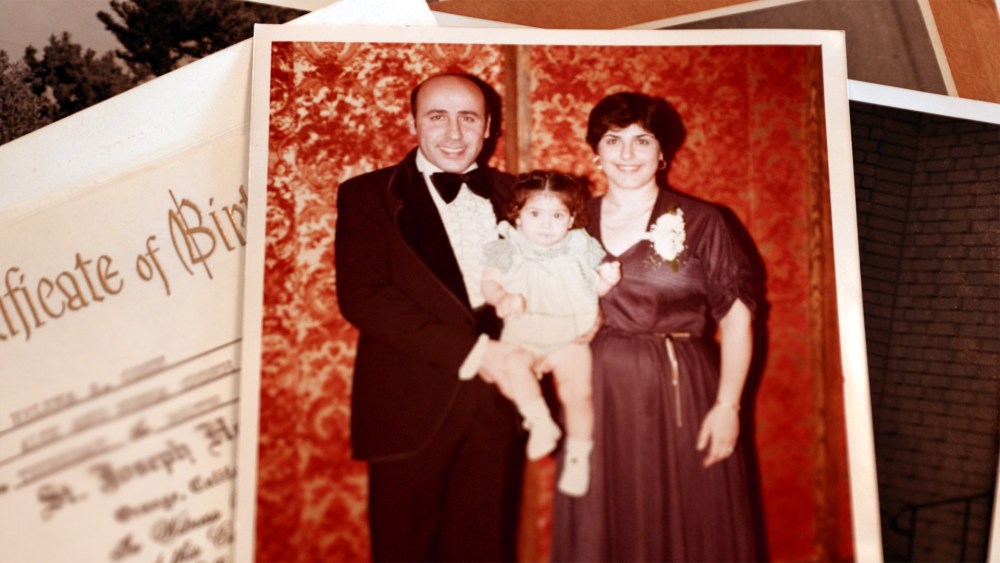
A film of deceptive simplicity, Jason Osder and William Lafi Youmans’s investigative documentary “Who Killed Alex Odeh?” often struggles against its own straightforward style, but in the process, embodies the helplessness of its grieving subjects. Its focus is the 1985 assassination of a Palestinian activist in California, the specifics of which it lays out through archival footage. However, contemporary interviews and investigations turn up surprising answers about who was responsible — not because their identities are unknown, but because the specifics have been in plain sight for decades.
The film’s very premise presents a challenge, especially in the age of the true crime documentary. The suspects who bombed the office of Alex Odeh have long been identified by the FBI, and while one was imprisoned for unrelated crimes, the other two have been living comfortably in Israel for many years. In the film, this is treated halfway between a major reveal and an inevitability — it’s hard to be quite sure of the intent — but what’s surprising isn’t these known facts about the alleged terrorists, but rather, the ease with which Israeli investigative journalist David Sheen follows up on these leads, which the authorities consider cold.
Using both old and contemporary footage, the movie captures — often plainly — the perspectives of Odeh’s widow and his daughter, in the form of sit-down interviews that help catch us up on various details. These talking-head segments seldom probe further than the surface of the subjects’ grief; such a thing might theoretically be invasive, but this is the nature of the filmmakers’ chosen topic. “Who Killed Alex Odeh?” is, or ought to be, as much about the question posed by its title as the secondary, implied question underneath: “Who was Alex Odeh?” This query is largely left up to news clips, from ‘80s and ‘90s, of people discussing him in death — both supporters and detractors alike. This gradually pivots the narrative toward the possible culprits in the form of the Jewish Defense League (JDL), an organization in Europe and North America branded a right-wing terrorist group by the FBI. However, who Odeh was outside these parameters of this death is given only glancing attention, making it hard to fathom who and what was lost.
The investigation itself takes curious turns, with surprises that are less about the facts themselves and more about the ease with which necessary information can be found online — a simplicity of access that ends up applicable to alleged perpetrators too. Reporters including Sheen can be seen concocting covert plots to meet with them face to face, the success or failure of which briefly becomes an intense point of interest. As the directors paint a portrait of the JDL and its founder Meir Kahane, the film becomes undoubtedly informative, with enough by way of violent statements made against Arabs, accompanied by spooky music, to really hammer home how scary these forces are.
However, what goes unsaid even amidst the most surprising parts of the reporters’ quest — including discoveries the camera captures in real time, about why the case was unceremoniously dropped — is the “why” of it all. The film can’t help but leave lingering questions about its bigger picture, i.e. the entwinement of American and Israeli politics, which still continues to influence why a case like Odeh’s might go unsolved or un-prosecuted. In its laser focus on Odeh’s death, it leaves out not only much of his life, but the more chilling global ripple effects of why this subject is of such vital importance today.
On one hand, a wider political purview is something each audience member ought to bring into a film themselves. On the other, “Who Killed Alex Odeh?” is left occasionally languishing in an awkward middle ground between probing the universality of this story and leaving it to the imagination. All in all, however, the movie’s straightforward aesthetic approach ends up jostled by the very nature of the story at hand, where it turns out, some 30-odd minutes into its runtime, that its most major twist is the fact that it lacks one altogether. It makes for an especially intriguing oddity where the sheer lack of stylistic flourish — for better or worse — feels rooted in an anti-mystery, where the dearth of available options for justice ends up paralyzing and defeating. By the end, its lack of catharsis is the point.



Leave a Reply