

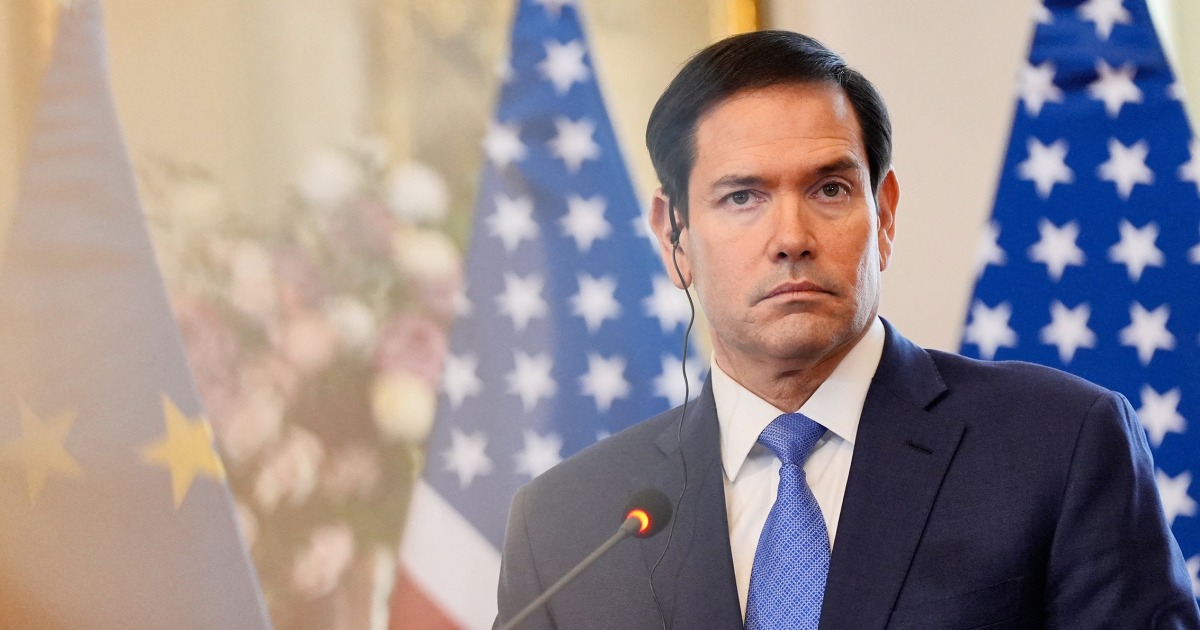
Where Rubio went next may be the clearest sign of who the Trump administration sees as its true allies in Europe.
After meeting with Fico in Slovakia the day after his speech, Rubio appeared alongside Orbán early Monday to hail the importance of U.S. ties with Hungary’s nationalist leader. Orbán’s hard-line stance on immigration and rejection of Western liberal values have been championed by conservative and hard-right movements in Europe and the United States, but he is nonetheless facing a serious challenge ahead of elections in April.
The two nations also announced the signing of an agreement on civilian nuclear cooperation.

A senior U.S. visit to Hungary immediately following Munich can’t be read simply as alliance maintenance, said H.A. Hellyer, a senior associate fellow at the Royal United Services Institute, a defense and security think tank in London. “It functions as an unmistakable signal of political affinity.”
Slovakia is not institutionally identical to Hungary, but it is moving along a recognizably similar trajectory under Fico, he said. The U.S. engagement with those two leaders reads less as neutral diplomacy and more as reinforcement, and even encouragement, toward governments drifting in a similar direction, he added.
Taken together, the order of Rubio’s engagements in Europe send a clear message, Hellyer said — “rhetorical reassurance to Western Europe in Munich, followed by demonstrative outreach to Central European governments politically aligned — or aligning — with the ideological themes shaping contemporary MAGA foreign-policy thinking,” he said.
Rubio said in his Munich speech that the Trump administration was driven by a “vision of a future as proud, as sovereign, and as vital as our civilization’s past.”
He referenced Christian faith as “a sacred inheritance” and “unbreakable link between the Old World and the new.” Like Vance, he also criticized “destabilizing” mass migration and urged Europeans to regain control of their national borders.
“While we are prepared, if necessary, to do this alone, it is our preference and it is our hope to do this together with you, our friends here in Europe,” Rubio said.
He was speaking to a room filled with officials from France, Germany, Britain and other nations long seen as America’s closest allies. But on Monday Rubio was hailing the U.S. commitment to Orbán and endorsing the euroskeptic strongman for another term in office.
Rubio chose to visit the “two most pro-Putin, anti-Brussels and Trump-loving leaders in the E.U.” after his “oily flattery” of the Europeans in Munich, Mujtaba Rahman, managing director of Eurasia Group, the geopolitical risk analysis firm headquartered in New York, assessed in a post on X.
“By their friends shall you know them,” he added.



Leave a Reply