

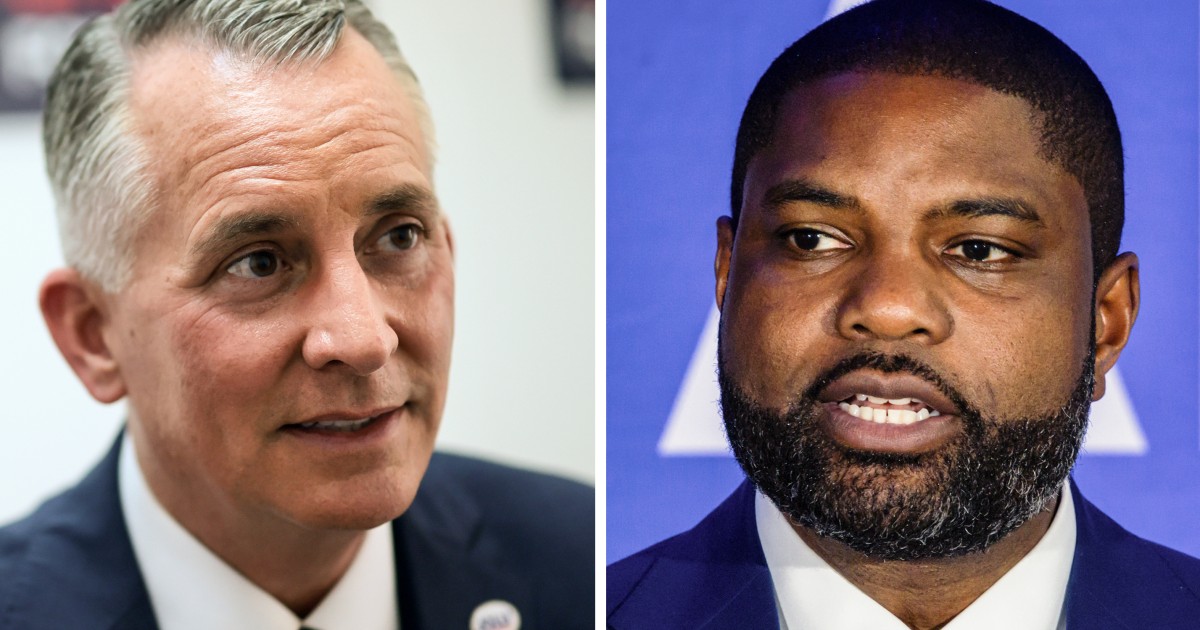
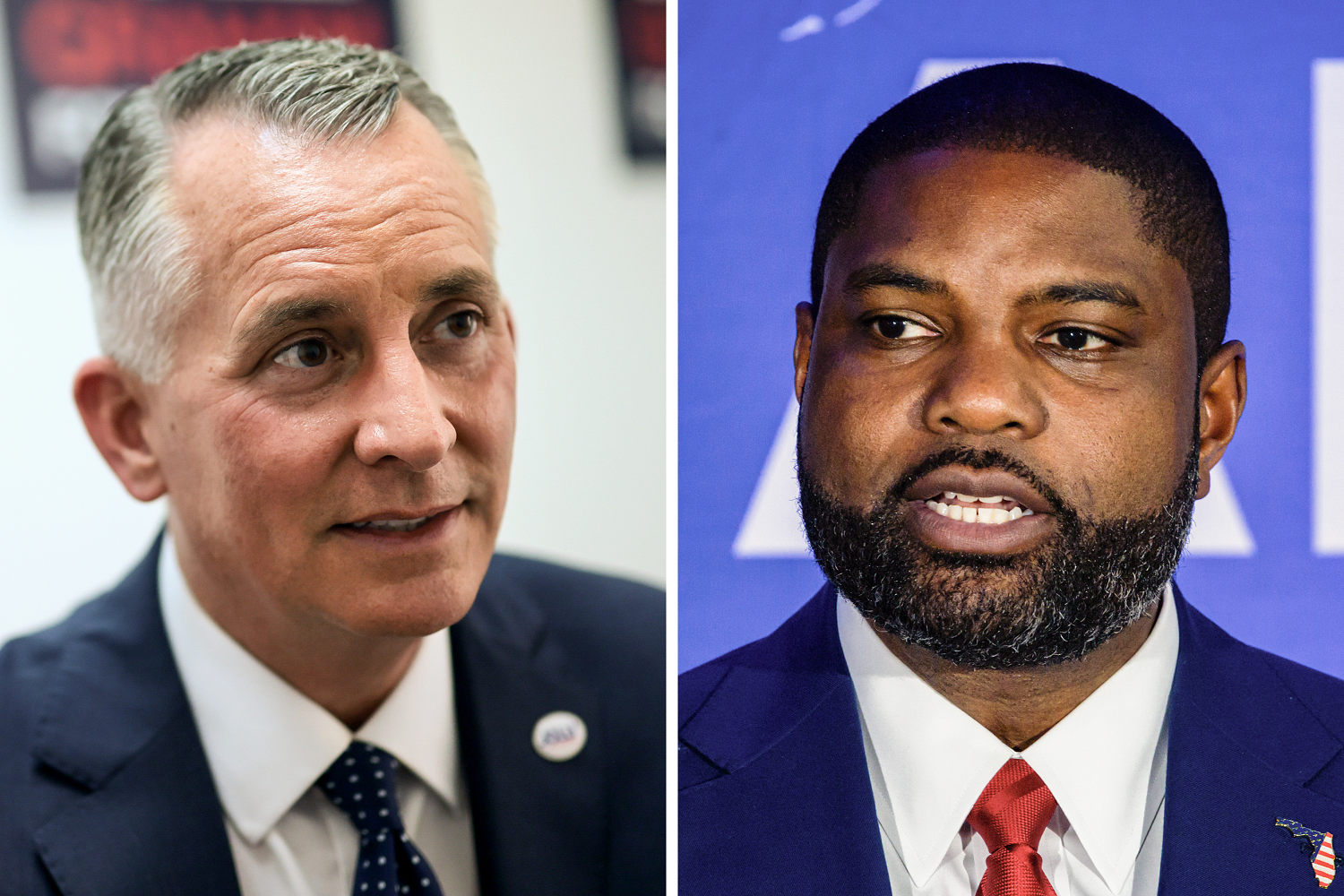
Republican Byron Donalds holds a 7-percentage-point advantage over Democrat David Jolly in the Florida governor’s race, according to a new NBC South Florida/Telemundo Station Group poll, while Republican Sen. Ashley Moody is up by 10 points in her matchup against Democratic challenger Angie Nixon.
Donalds, a congressman from the southwest corner of the state, is at 48% in the poll, compared with Jolly’s 41%, in a race in which Donalds has had a commanding financial advantage. (That advantage is just inside the poll’s margin of error, but Donalds has the edge in most of the range of possibilities.)
Moody is at 50% in the Senate race, compared with 40% for Nixon, a Democratic Socialists of America-aligned candidate who got into the general election after a surprise primary victory over Democrat Alexander Vindman in August.
The results come amid broad Democratic optimism about the 2026 elections, with public polling showing the party making races in some typically red states into competitive contests this year. This poll suggests limits to that apparent momentum in other places.
The poll also took a snapshot of the state’s hugely influential bloc of Hispanic voters, largely congregated in South Florida. In 2024, Donald Trump won Hispanic-heavy Miami-Dade County by roughly 11 points, a significant reversal in a part of the state that had long been Democratic-leaning. Joe Biden won the county by 7 points in 2020.
But now, Florida Hispanic voters — including large Cuban, Nicaraguan, Honduran and Colombian populations — appear to be swinging back away from Trump, even as other high-profile Republican candidates hold comfortable leads among Hispanic voters.
Donalds holds a 48%-43% lead over Jolly among Hispanic voters, according to the survey, while Moody is up 47%-40% over Nixon. Trump’s job performance rating, however, is underwater, with 49% disapproving of his job performance, compared with 45% who approve.
Overall, 48% of all Florida likely voters approve of Trump’s job performance and 48% disapprove.
Before Trump’s gains among Florida’s Hispanic population in 2024, Democrats had generally won the demographic in the state by comfortable margins. Democrats argue that recent special election victories in Florida show the party has already started winning back the Hispanic vote, in part because of Trump’s aggressive immigration enforcement policy. Unhappiness with prices and the cost of living has also affected Trump’s ratings among Hispanic voters.
“In legislative races in Florida, we have seen huge swings,” Suzan DelBene, D-Wash., chair of the Democratic Congressional Campaign Committee, told NBC News last week, speaking of the committee’s efforts in Florida House races. She said that on immigration, Trump and his party broke a promise “to go after the worst of the worst.”
By far the most important issue identified was inflation and the cost of living, with 30% saying it is likeliest to influence their votes. In both the overall sample and the sample of Hispanic voters, “direction of the state or country” (17%) was the second most important issue. The broader polling data put “immigration enforcement” as the third most important issue (16%), while the Hispanic sample put property taxes (13%) as the third most important issue. Immigration enforcement was the fourth most important issue among Hispanic voters (12%).
Questions about the Trump administration’s push to allow local and state policy to cooperate with federal immigration officials fell along party lines.
Among all voters, 85% of Republicans support the policy, compared with 18% of Democrats and 44% of those identified as independent voters who supported the harsher immigration enforcement tactics.
Property taxes have also been front and center in Florida during the midterms.
The state Republican Party and term-limited Gov. Ron DeSantis support a ballot measure, known as Amendment 3, that would increase property tax exemptions to the first $250,000 of a home’s value by 2028. The exemption cap is currently $50,000.
In the poll of all Florida voters, 55% back the amendment, 26% oppose it, and 19% are undecided. Nearly three-quarters (74%) of Republicans supported the idea, compared with 36% for Democrats and 43% for independents.
The overall survey questioned 625 registered voters, all of whom said they were likely to vote in the November elections. They were interviewed over the telephone by Mason-Dixon Polling & Research Inc. from Sept. 28 to Thursday, with a margin of error of plus or minus 4 percentage points. The same time frame and methods were used to survey 400 Hispanic registered voters, with a margin of error of plus or minus 5 percentage points.












Leave a Reply