

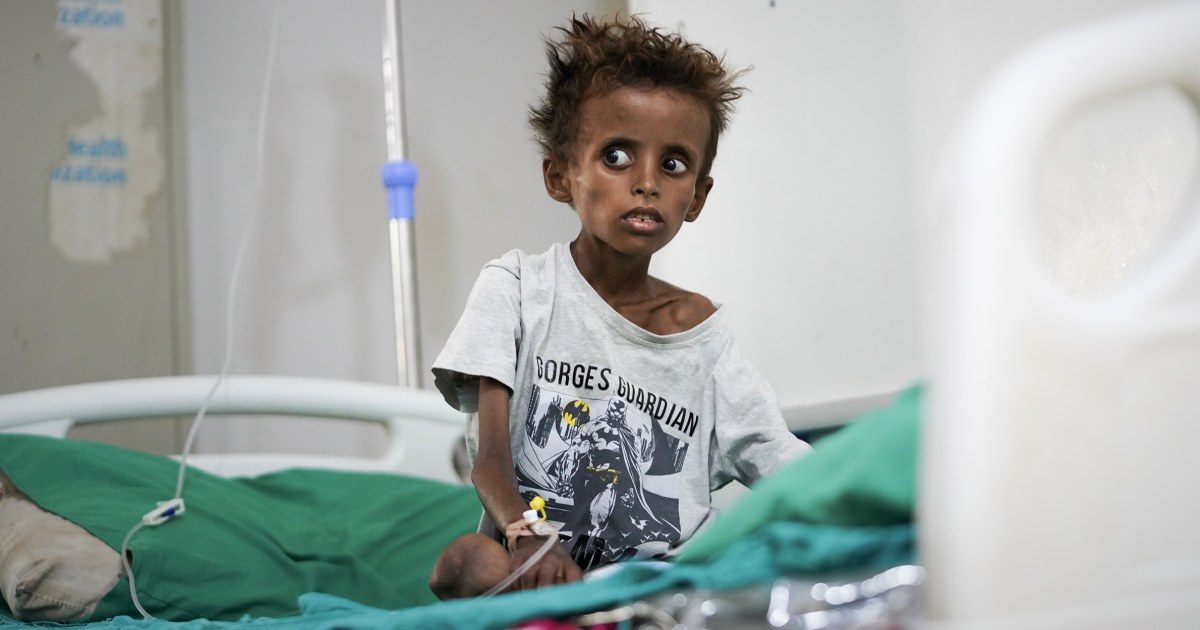
ADEN, Yemen — Tarek al-Salami, aged 7, sat in a diaper, looking frail. Normally, the malnutrition and diarrhea that weakened his tiny frame would have been treated within a few days, but nothing is normal in Yemen anymore.
Tarek’s father carried him on foot from the southwestern city of Mokha as Iran-backed rebels swept in this month, bringing a return to civil war. The boy reached a hospital two days later in the government-held city of Aden, 270 kilometers (170 miles) away but it said it had no beds. Like others, it was overwhelmed by the wounded. They finally found a therapeutic feeding center.
The boy arrived in “acute crisis” after the delay in care, according to the center’s director, Dr. Arwa Atef, and he only began walking again on Wednesday, over a week later.
“I swear to God, when I look at him, my heart breaks,” said his father, Mohammed al-Salami. “He looks almost lifeless.”
This is how the already fragile health system in the Arab world’s poorest nation is collapsing, caught in a new front of the Iran war. The Associated Press spoke with patients, medical workers and aid groups in Yemen as medicines run short and some workers flee. A few facilities have been overtaken by the fighting.
Some health centers are turning pregnant women and others in need away to focus on trauma patients. Vulnerable children are filling incubators and sharing beds. Millions of people are affected by the fighting backed by two of the Middle East’s biggest powers as Iran-backed Houthis advance against government forces supported by Saudi Arabia. Over 130,000 have fled their homes.
The feeding center where Tarek and other children are recovering is struggling to cope with a rise in patients in a country where many already were hungry, Atef said.
“We can’t keep up with the situation,” she said.
Overwhelmed hospitals focus on the wounded
Most hospitals and primary health centers affected by the escalation in fighting closed for the first 48 hours before resuming services, the United Nations said. But the Houthis have seized the Red Sea coast, including key ports for aid.
“The areas with some of the highest health needs are increasingly difficult to reach,” the World Health Organization said Friday.











Leave a Reply