

In today’s newsletter: Democrats aim to capitalize on voter frustrations with the economy to gain control of the Senate, victims of the Miami plane crash were in a cleaning-company van and an SUV, and a computer program algorithm is slashing Medicaid funding.
Here’s what to know today.
The Senate is up for grabs, as Democrats navigate a tough map and Republicans face a stormy environment

Several battlegrounds have begun to tilt towards Democrats, and real fights are emerging in red states as control of the Senate wanes. Twenty strategists from both parties involved in Senate races spoke with NBC News candidly about their party’s strategy across the country. To net the four-seat gain they need, Democrats are looking to tap into what one strategist described as “an ever-present hum of anger” over high costs and political corruption.
“No matter how many good things I told them, they were just pissed about the price of groceries,” said Democratic strategist Chuck Rocha, who is advising Democrat James Talarico’s campaign in Texas and other outside groups involved in Senate races. “That has not changed, and now Republicans are in charge.”
But several Republicans believe the GOP is still likely to prevail after tying Democratic Senate candidates to the far left, particularly in deeply red states where that messaging could be divisive. They’re planning to highlight Trump’s “big beautiful bill,” which capped or lowered taxes on tips, overtime and Social Security.
Read more about how Republicans are addressing the president’s messaging struggles, while Democrats are navigating party skepticism.
Related news:
- Trump is hoping former GOP Sen. John Sununu prevails in today’s New Hampshire primaries
- Steve Kornacki breaks down why Republicans believe they have a shot at a Senate seat in New Hampshire.
Victims of Miami plane crash were in a cleaning-company van and an SUV, officials say

The five people killed when an Amazon-branded cargo plane overran the runway at Miami International Airport were traveling in a van transporting an airport cleaning crew and in an SUV driving outside the airport, officials said.
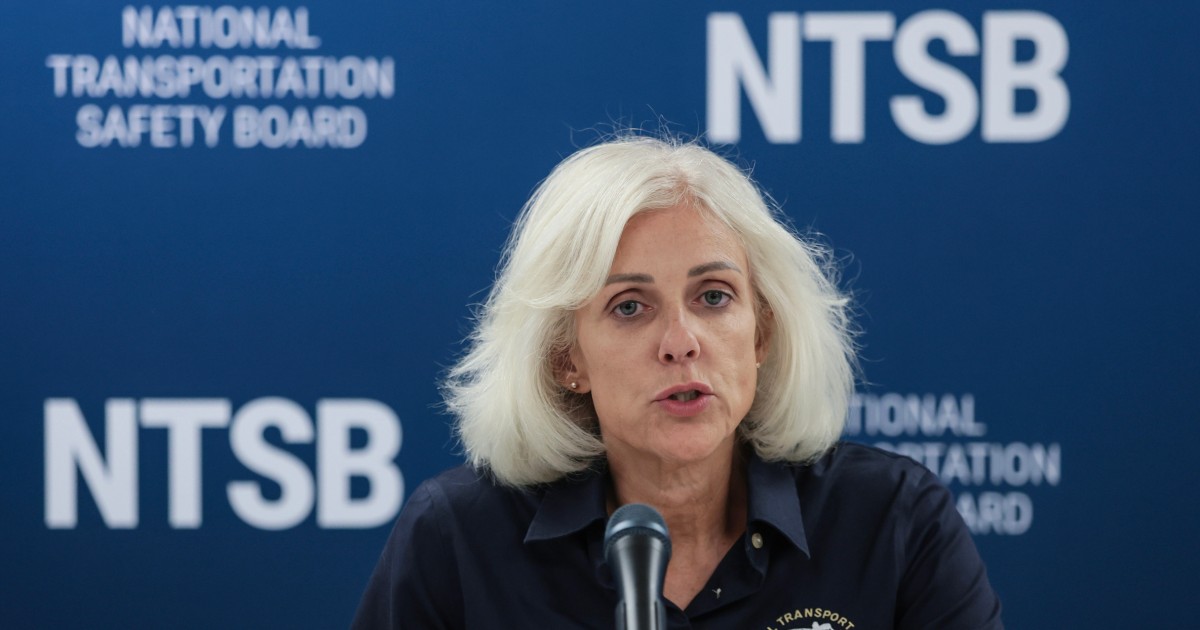
The plane hit a Ford van owned by Professional Ocean Service Corporation, traveled through a perimeter fence, and then struck a Toyota SUV. The aircraft then continued into the grass, where it hit a fence line, said National Transportation Safety Board Chair Jennifer Homendy.
The plane’s flight data and cockpit voice recorder have been recovered, she said, and the NTSB will look at air traffic control and aircraft performance as it probes the crash.
Read more about the state of the investigation into the crash.
A secret computer algorithm is taking caregiving money away from disabled people

The question haunted Susan Browne for decades: Who would care for her two disabled sons after she and her husband were dead? Her sons David, 47, and John Michael 45, have profound autism and need help with every daily task, from bathing and dressing to using the bathroom — care that has grown harder for Browne and her husband to manage as they’ve aged.
The Brownes believed they had finally found a solution: Using Medicaid funding for people with disabilities, they created a nonprofit last year and assembled a trusted team to care for David and John Michael at home for the rest of their lives.
Now that plan is falling apart — thanks to a secretive computer algorithm. Nebraska used the assessment tool, called interRAI, to slash David and John Michael’s combined Medicaid funding by more than $220,000 a year.
It’s not just the Browne brothers. Since Nebraska adopted interRAI last year, the state has cut Medicaid funding to nearly 900 people with developmental disabilities. State officials say the standardized system makes funding decisions fairer and more consistent. But families describe assessments riddled with preposterous errors, caregiving cuts so severe they fear for loved ones’ safety and an appeals process that appears to rubber-stamp whatever the algorithm decides.
Read the full story here.
NBC News is looking to speak to people who rely on Medicaid-funded care at home, as well as family members, workers and advocates who support them. Share your experience.
A first look at the aftermath of the deadly Tibet floods

Gyirong Port in China’s semiautonomous Tibet region was once a busy and vibrant crossing for trade and tourists. Now, nothing remains.
The buildings and parking lots have vanished in a thick mound of debris, with pieces of concrete and steel rebar jutting out from the mud. Only one small structure on a hill looking toward the river valley with Nepal appears to have survived the deluge.
A single Chinese flag stands where the main border control building used to be. Yellow flowers have been placed along the river in memory of the dead.
This was the first time since the Aug. 26 disaster that foreign journalists have been allowed to see the damage on the Tibet side, on a tightly controlled visit organized by the Chinese government.
NBC News’ Janis Mackey Frayer reports from the scene.
Staff Pick: How parent activists pushed schools to restrict AI and screen time — and won

The nation’s two largest school districts — Los Angeles and New York — unveiled sweeping AI bans this week, and Washington, D.C. public schools laid out a set of new rules that included screen time caps for younger students. But these announcements didn’t come out of nowhere. They were the result of months of pressure from a burgeoning grassroots movement of parents that started less than a year ago.
Earlier this year, I spoke with two dozen parents in Los Angeles who had just formed a group called Schools Beyond Screens. They were horrified with how much time their kids spent on school-issued laptops and iPads in class, and some told me their grades suffered from near constant access to Minecraft and YouTube. One mom said her son repeatedly wet himself in class because he became so engrossed in the iPad.
The group now has chapters in 40 states. Lily Byock, one of its co-founders, said the new screen time and AI rules “prove that people have the power to reclaim public schools from corporate influence.” Experts believe more cities are likely to follow.
— Tyler Kingkade, enterprise reporter
Read All About It
- President Donald Trump said yesterday that the Canadian aerospace company Bombardier should no longer be allowed to sell its planes in the U.S., opening a new front in his trade war hours before new Canadian tariffs on American goods took effect. The move drew an objection later from Sen. Jerry Moran, R-Kan., whose state hosts Bombardier’s U.S. headquarters.
- For subscribers: Homeland Security Secretary Markwayne Mullin’s latest guidance on body cameras has left much of the agency confused.
- The family of Celeste Rivas Hernandez is calling for singer D4vd to face the death penalty.
- The National Weather Service issued hurricane warnings for three islands as Hurricane Lowell nears Hawaii.
NBC Selected: Online Shopping, Simplified
It may be illegal to touch your phone while driving in your state. Here’s what you need to know and the products that can help you go hands-free. Plus, Papier just launched two limited-edition Advent calendars for 2026, and they’re going to sell out fast. Get yours while you still can.
Sign up to The Selection newsletter for hands-on product reviews, expert shopping tips and a look at the best deals and sales each week.
Thanks for reading today’s Morning Rundown. Today’s newsletter was curated for you by Elizabeth Robinson, Kaylah Jackson and Kayla Hayempour. If you’re a fan, please send a link to your family and friends. They can sign up here.










Leave a Reply