


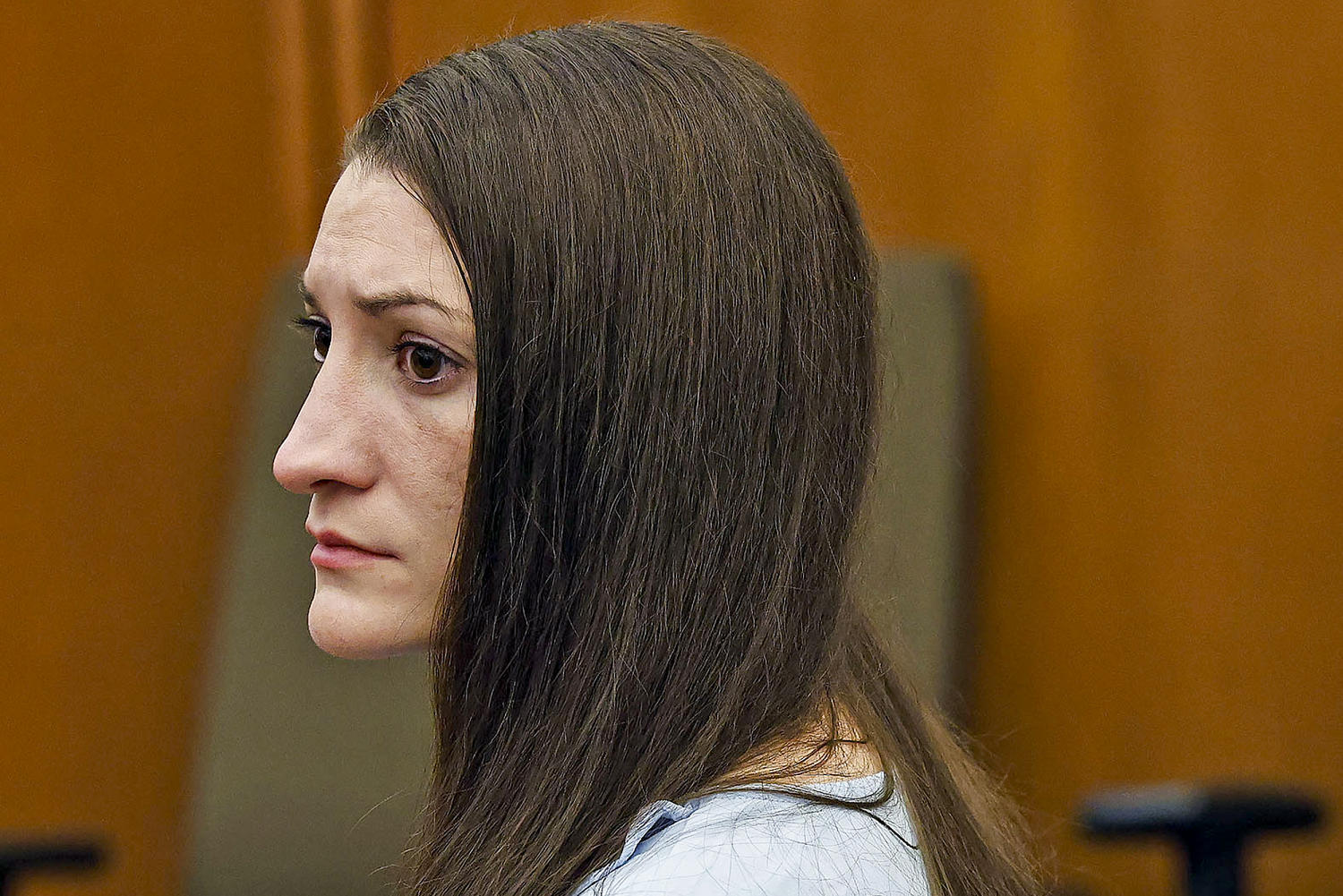
Jurors in the Lindsay Clancy murder trial have one last chance to reach a verdict before Judge William Sullivan can declare a mistrial in a case that has captivated the nation for the last six weeks.
After returning from lunch on Wednesday at 2 p.m., the jury handed Sullivan its second deadlock notice, alerting the court that after nearly five days of deliberations, the nine women and three men who make up the jury could not reach a unanimous decision on Clancy’s fate.
That note followed the first one, which came Tuesday morning.
Sullivan can only send the jury back to deliberate twice before he is able to declare a mistrial, unless the jury consents to more days of deliberations.
After the second deadlock note, he gave jurors Tuey-Rodriguez instructions, which essentially asks them to give deliberations one last chance and tells jurors that it’s “desirable” they reach a verdict.
If they return with a third deadlock note on Wednesday, Sullivan will likely declare a mistrial.
But defense attorney Kevin Reddington has insisted that he is ready to go for a second trial, telling reporters outside of the courthouse in Plymouth, Massachusetts, on Thursday morning that he would be ready to re-try Clancy’s case as early as next week.
Prosecutors have not indicated whether they, too, will be ready for a new trial that soon, or whether they want to re-try the case at all.
The jury must decide whether Clancy is criminally responsible for killing her three children — Cora, 5, Dawson, 3, and Callan, 8 months — on Jan. 24, 2303, before she threw herself out of her bedroom window in a suicide attempt that left her paralyzed and in a wheelchair.
Reddington has argued that Clancy was in the throes of postpartum psychosis at the time of the children died, and she was compelled to act on auditory hallucinations commanding her to carry out the killings.
Prosecutors, however, denied that Clancy was in a state of psychosis when she strangled the children with exercise bands, and argued that she planned out the killings ahead of time, sending her then-husband out for errands when she wanted to carry out the attacks.
While the prosecution has sought a first-degree murder conviction, which would carry a life sentence, the jury can also convict Clancy of lesser charges — second-degree murder or manslaughter — or deem her not guilty due to lack of criminal responsibility.














Leave a Reply