

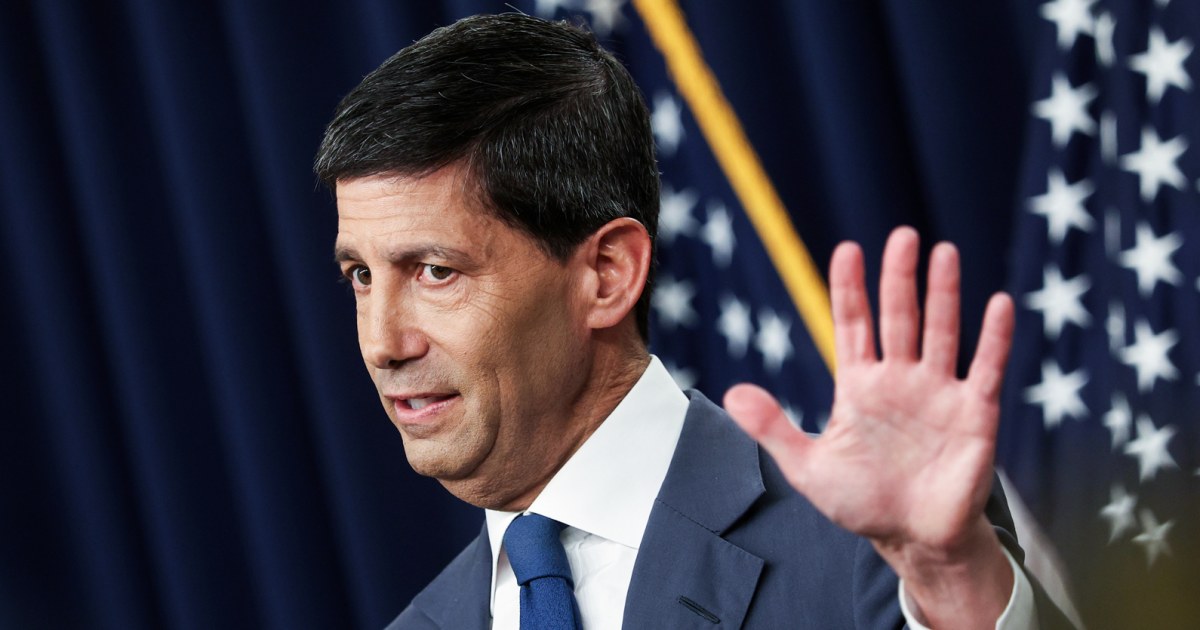
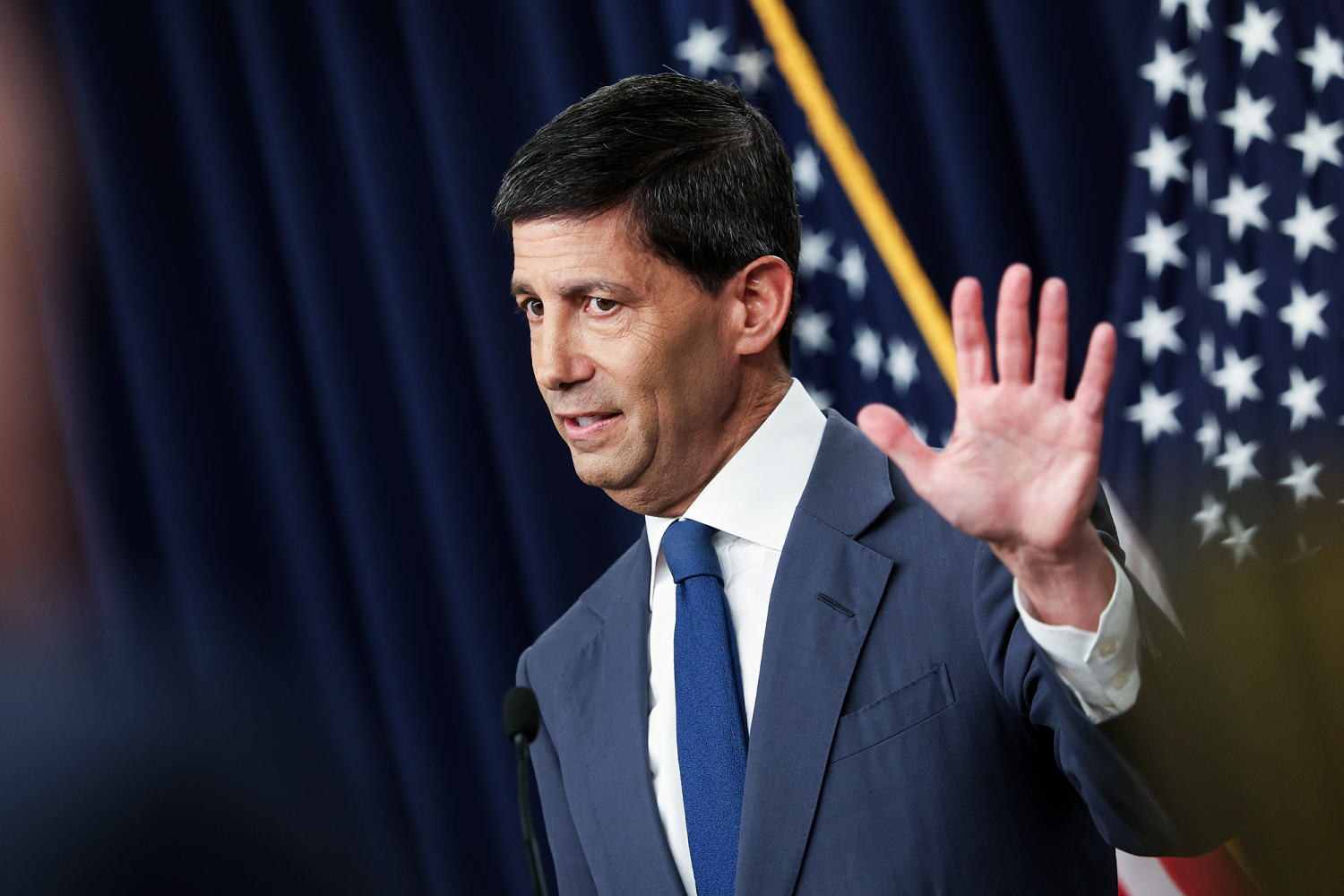
JACKSON HOLE, Wyo. — There is a lot riding on Federal Reserve Chair Kevin Warsh’s speech here Friday morning at the Fed’s storied annual retreat in the Tetons.
Previous Fed chairs have used the annual Jackson Hole address to deliver major policy announcements, and Warsh said last month that he would use the occasion to “frame the big questions” facing the Fed.
But just three months into the job, Warsh faces a growing list of more immediate questions for the central bank he leads.
Inflation
The inflation rate in July was 3.4%, still well above the Fed’s 2% target rate. And with oil prices showing no sign of returning to pre-Iran war levels this year, pressure is increasing on the Fed to combat that sticky inflation by raising interest rates at its next policy-setting meeting in September.
But the Fed under Warsh is widely expected to buck that pressure and hold rates steady next month, a consensus reflected in Fed funds futures contracts.
But that approach has plenty of detractors.
Cleveland Fed President Beth Hammack is one of several Fed central bankers who are making the case for raising rates sooner rather than later.
“I believe it’s time to act. I think we’ve seen inflation above target for too long,” Hammack said Thursday in an interview on the sidelines of the conference.
Hammack voted to raise rates at the Fed’s last meeting in July, but she was outvoted by fellow members of the Federal Open Market Committee who wanted to keep them steady.
In Wyoming, Hammack recounted her recent visit with a group of manufacturing plant workers in Erie, Pennsylvania. They told her that no one expected inflation to move lower in the next year.
That kind of sentiment “makes me really nervous,” she said. “Is this inflationary mindset starting to set in?”
Consumers are also seeing everyday costs rise as a result of President Donald Trump’s tariffs, she said. There’s a “concern that prices are going to continue to go up,” she said.
Bond yields
Persistent inflation, tariffs and whipsawing gas prices are not the only obstacles complicating the task for the Fed.
In the weeks since Warsh’s last news conference, bond yields have surged to levels not seen in more than a decade. Experts say a big reason for the move higher was how little information Warsh conveyed about the Fed’s plans during that news conference last month.
Without a clear message from Warsh, investors began to doubt the Fed’s inflation-fighting resolve.
“Warsh has ground to make up after his July press conference failed to articulate a coherent strategy for ensuring inflation returns to target and hit his credibility,” Evercore analysts wrote in a note this week.
Adding to the challenges facing Warsh is the fact that the U.S. economic outlook is more complicated today than it was just a few weeks ago when he spoke to reporters in Washington.
U.S. sovereign debt is facing unexpected headwinds, and Warsh is presiding over growing turmoil in financial markets.
Last week, the Treasury Department announced plans to intervene in the bond markets by buying back at least $4 billion of long-dated government debt.
The move appeared to be a play to push long-term interest rates lower, but it did not work. Bond yields briefly plunged, but within a day they were trading higher again.
“Given Warsh’s July debacle and a febrile bond market after Bessent’s attempted intervention, the stakes are high” for Warsh’s Jackson Hole speech, wrote the Evercore analysts.
In recent weeks, Warsh’s and Treasury Secretary Scott Bessent’s approaches to recent market moves increasingly seem to be at odds with each other.
While Warsh has signaled that he is willing to let bond yields rise in response to market forces, Bessent appears unwilling to let longer-dated bond yields go up.
Ultimately, Bessent’s approach is likely to fail, said Peter Boockvar, chief investment officer of One Point BFG Wealth Partners and editor of The Boock Report newsletter.
“The market is in the driver’s seat,” said Boockvar, and not even the Treasury Department can replace the market’s ability to set long-term interest rates.
“Bessent wanted to take the wheel from Warsh, and the market is telling Bessent, ‘We’re the ones who have the wheel,’” Boockvar said.
Forward guidance
All of that is happening as markets, investors and economists are trying to digest a dramatic shift in the Fed’s communication strategy.
So far, Warsh has resisted rising pressure to share any “forward guidance,” or hints about what the Fed may do in the weeks and months ahead.
Despite the sea change underway in how the Fed interacts with the public, Hammack said there are relatively few signs of it behind closed doors in the daily workings of the committee. “Things have been more similar than they’ve been different inside the [FOMC] meeting room,” she said.
That continuity, however, should not detract from the importance of clear communication from the central bank, she said.
“Transparency is critical for us to be able to explain to the public broadly how we’re thinking about the economy and how we think things will progress,” she said.
While there may be dissent about how much transparency is the right amount, no one thinks Warsh is going to deliver a lot of it Friday.
“We do not expect forward guidance in Chairman Warsh’s Jackson Hole speech,” UBS economists wrote in a client note this week.
After all, they noted, “a road map for the [Fed] funds rate for the remainder of the year has just not been his style.”



Leave a Reply